


Not all patients experience this equally. The prevalence of cold conduction issues has actually increased as FFS techniques have become more advanced. In the past, aggressive bone “shaving” was the norm. Today, surgeons like those at the Feminization Center prefer Type III reconstructions, which involve osteotomy and the use of titanium plates to set the bone in a more feminine position. While this produces superior aesthetic results, it introduces more osteosynthesis hardware into the facial structure.
Furthermore, the feminization process often involves thinning the soft tissue or repositioning the muscles to create a softer appearance. This secondary effect reduces the biological insulation over the plates. If you live in a city like Toronto, Stockholm, or Chicago, your face is frequently exposed to high-velocity cold winds. These winds accelerate “convective cooling,” stripping heat away from the skin and quickly cooling the underlying titanium. The result is a sharp, deep-seated coldness that feels like it’s “inside the bone.”
Another factor is nerve regeneration. Following surgery, nerves in the forehead and jaw are in a state of healing. Regenerating nerves are often hypersensitive to temperature fluctuations. Therefore, the cold sensation isn’t just about the temperature of the metal; it is about a hyper-reactive nervous system interpreting a 5-degree drop in hardware temperature as a significant pain event. Understanding this distinction is the first step in effective thermal sensitivity management.
Table of Contents
Thermal Sensitivity Management: The 4-Step Protocol for Cold Climates
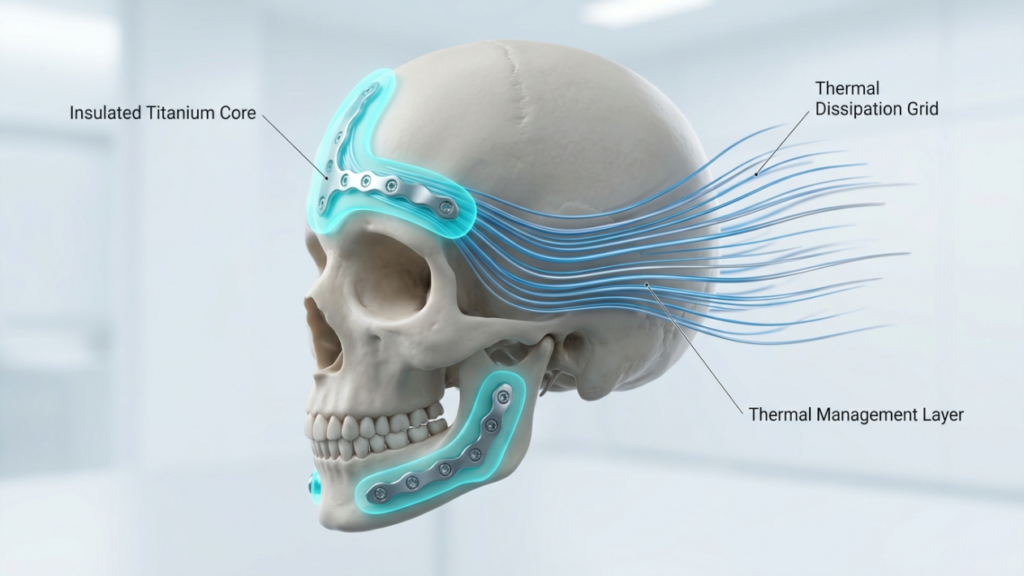
If you find yourself dreading the winter months post-FFS, you don’t have to simply endure it. Effective thermal sensitivity management requires a combination of external barriers, internal support, and, in specific cases, surgical refinement. We recommend a tiered approach that starts with the least invasive methods before considering more permanent solutions.
First, address the external environment. Standard winter gear often leaves the forehead or jaw exposed. For FFS patients, a high-quality cashmere or wool beanie isn’t enough; you need a wind-blocking layer. Look for hats with GORE-TEX liners or “wind-stopper” technology specifically around the brow area. By preventing wind from hitting the skin directly over the plates, you significantly slow down the convective cooling of the titanium hardware.
Second, consider the “Internal Buffer” method. Patients who have undergone Fat Transfer to Face (Fat Grafting) often report much lower levels of thermal sensitivity. Fat is one of the best natural insulators in the human body. By placing a thin layer of micro-fat over the hardware sites, surgeons can create a biological thermal break. This doesn’t just improve the softness of the facial contours; it provides a permanent “warmth jacket” for your titanium plates.
- Micro-Layering: Wear a silk or synthetic balaclava under your main scarf or hat. Silk is an incredible insulator that traps a thin layer of warm air directly against the skin.
- Topical Vasodilators: In extreme cold, some patients find relief by using warming creams that increase blood flow to the skin surface. However, use these cautiously to avoid irritating healing scars.
- Dietary Thermogenesis: Maintaining high core temperatures through nutrition and hydration helps the body keep peripheral tissues (like the face) warm. Dehydration makes you more susceptible to “feeling” the cold in your hardware.
- Hardware Removal: If the pain persists after 12–18 months, the bone has likely fused completely. At this stage, the plates have served their purpose and can be removed.
When to Move from Management to Hardware Removal
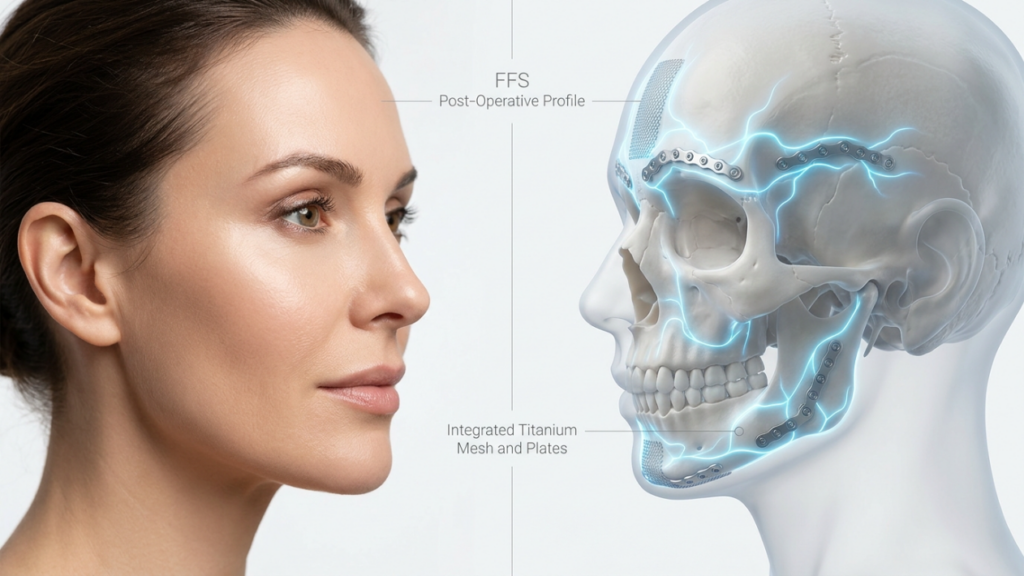
For most patients, thermal sensitivity management via clothing and fat grafting is sufficient. However, for a small percentage of individuals, the discomfort remains a chronic quality-of-life issue. This is where hardware removal criteria must be evaluated. It is a common misconception that these plates must stay in forever. In reality, once the bone has undergone “primary healing” (usually within 9 to 12 months), the titanium plates and screws become redundant.
Hardware removal is a much shorter and less invasive procedure than the original FFS. It typically involves small incisions, often through the original scar lines, to back out the screws and remove the plates. The relief from thermal conduction is almost instantaneous. Because the bone has fully solidified, there is no risk of the facial structure “shifting.” Many patients find that removing the hardware also resolves minor palpable “bumps” they could feel through the skin, leading to a smoother aesthetic result.
However, we advise patience. Nerve healing is a slow process that can take up to two full years. What feels like thermal pain at month six might simply be a regenerating nerve that will eventually calm down. Surgeons generally recommend waiting at least one full winter cycle before deciding on removal. If you are still experiencing significant “cold aching” by the second winter, then hardware removal becomes a logical and effective step in your thermal sensitivity management journey.
Strategic Steps: Recovering and Living in Cold Climates
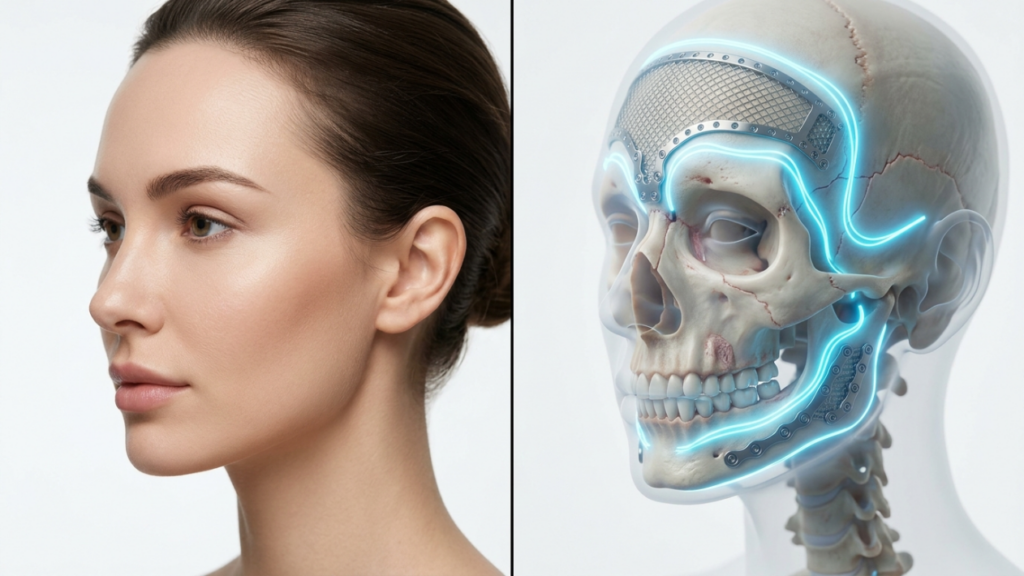
Managing thermal sensitivity actually begins before you ever feel the first snowflake. If you are planning your surgery, consider the timing and location of your recovery. This is one reason why many patients from the UK, Scandinavia, and Canada choose to have their FFS in warmer locations like Antalya, Turkey. Recovering in a Mediterranean climate allows the initial, most sensitive phase of healing to happen without the stress of cold-induced pain.
When you do return to a colder environment, follow these actionable steps to ensure your hardware doesn’t become a source of distress:
- The 12-Month Rule: Acknowledge that the first winter will be the hardest. Your nerves are still “learning” how to process signals. Do not panic if the hardware feels cold; it is a physical reality, not a surgical failure.
- Identify Your Trigger Points: Pay attention to exactly where the cold “bites.” Is it the center of the forehead or the angles of the jaw? Use localized protection, like a targeted thermal patch or extra layering, specifically in those zones.
- Hydrate and Protect: Cold air is dry air. Dry skin is thinner and less effective at holding heat. Use high-quality occlusive moisturizers to keep the skin barrier thick and hydrated, which provides a minor but helpful level of extra insulation.
- Consult Your Surgeon Early: if you are planning a follow-up procedure, such as a lip lift or fat grafting, mention your thermal sensitivity. Your surgeon can strategically add fat or tissue during that session to address the cold conduction.
- Evaluate Hardware Removal: If by the 18-month mark the cold conduction is still affecting your ability to enjoy the outdoors, schedule a consultation specifically for hardware removal. It is a valid and common path to final comfort.
Ultimately, thermal sensitivity management is about reclaiming control over your post-operative experience. You chose FFS to feel more like yourself, and that includes feeling comfortable in every environment. Whether through better clothing, fat grafting, or the eventual removal of plates, the “inner frost” is a manageable hurdle on the path to your new life. Stay warm, stay informed, and remember that your comfort is just as important as your aesthetic result.
Frequently Asked Questions
Is it normal to feel cold in my forehead plates after FFS?
Yes, it is entirely normal. Titanium hardware has a much higher thermal conductivity than bone, acting as a ‘thermal bridge’ that allows external cold to reach internal tissues. This sensation is especially common in areas with thin skin, like the forehead. Most patients find this sensation decreases over the first two years as nerves heal.
Can titanium plates in my face freeze?
Titanium plates cannot ‘freeze’ inside your body, as your core body temperature and blood flow keep them warm. However, they can drop several degrees in temperature when exposed to cold wind, which is enough to trigger sensitive nerve endings. Effective thermal sensitivity management prevents this temperature drop from causing pain.
Does fat grafting help with cold sensitivity in FFS patients?
Absolutely. Fat is a natural biological insulator with very low thermal conductivity. By placing a layer of fat through grafting over the titanium plates, surgeons create a protective barrier. This significantly reduces the rate at which external cold reaches the hardware, making you much more comfortable in winter.
When is the best time to remove FFS hardware if it’s too cold?
Surgeons generally recommend waiting 12 to 18 months post-surgery before removing hardware. By this time, the bone has fully fused and the plates are no longer necessary for structural support. Removing the hardware after the bone is stable is a safe and effective way to permanently eliminate cold conduction issues.

To understand thermal sensitivity management, we must first look at the material science. Titanium is the gold standard for Facial Feminization Surgery – FFS because it is lightweight, incredibly strong, and integrates with the bone. However, its thermal properties are vastly different from the biological tissues it replaces. Cortical bone—the dense outer layer of your skull—acts as a natural insulator. It has a low thermal conductivity rate, meaning it takes a long time for external cold to penetrate deep enough to affect nerve endings.
Titanium, conversely, is a metal. While it is a poor conductor compared to copper or silver, its conductivity is roughly 15 to 20 times higher than that of human bone. When you are exposed to sub-zero temperatures, the supraorbital rim plating or jaw hardware begins to shed heat to the environment. Because the metal sits directly against the bone and often very close to the skin in FFS patients, it creates a localized “cold spot.” This isn’t just a feeling; the metal is physically lowering the temperature of the surrounding vascularized tissue and nerves, triggering a cold-induced pain response.
| Material | Thermal Conductivity (W/m·K) | Insulation Quality |
|---|---|---|
| Human Cortical Bone | 0.4 – 0.6 | High (Natural Insulator) |
| Titanium (Grade 5) | 6.7 – 7.5 | Low (Thermal Bridge) |
| Medical Grade Silicone | 0.2 – 0.3 | Excellent (Thermal Barrier) |
| Adipose Tissue (Fat) | 0.2 | Excellent (Natural Buffer) |
This “thermal bridge” effect is most pronounced in areas where the skin is thin. In a Forehead Contouring & Brow Bone Reduction, the plates are placed in an area with very little subcutaneous fat. Consequently, the distance between the freezing winter air and the titanium plate is sometimes less than 5 millimeters. This lack of cortical bone insulation means the hardware reaches ambient temperature much faster than the rest of your face, leading to that distinct, localized “aching” sensation.
 English (United States)
  English (UK)
  Spanish
  Dutch
Dutch  German
  Arabic
  French
  Russian