


If you’re seeking a permanent, natural-looking solution to achieve a heart-shaped, feminine facial contour, buccal fat repositioning is emerging as a groundbreaking alternative to traditional fillers and fat grafting. Unlike temporary or synthetic options, this technique leverages your body’s own tissue to sculpt the midface, enhance cheekbones, and refine the lower face—all while preserving facial harmony and avoiding the overdone look that can result from fillers. Here’s why buccal fat repositioning is redefining facial feminization in 2026.
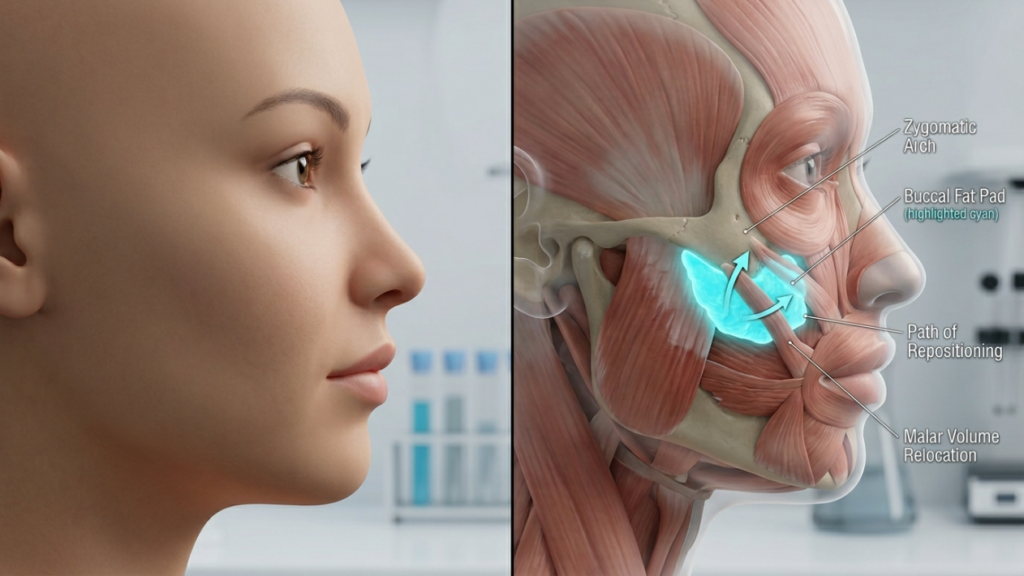
Table of Contents
Why Buccal Fat Repositioning Stands Out in 2026
Facial feminization surgery (FFS) has long relied on a combination of bone contouring, fat grafting, and fillers to achieve feminine aesthetics. However, these methods often come with limitations: fillers require maintenance, fat grafting can be unpredictable, and implants may feel unnatural. Buccal fat repositioning addresses these challenges by offering a permanent, autologous solution that enhances midface volume while simultaneously slimming the lower face. This dual benefit is particularly valuable for transgender women and non-binary individuals seeking a balanced, feminine contour without the need for repeated procedures.
The Science Behind the Technique
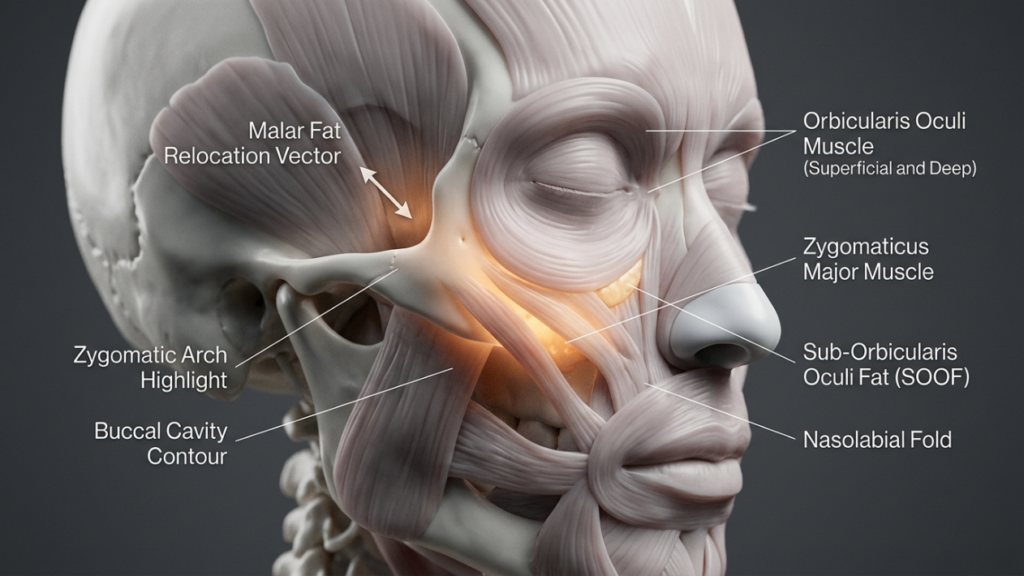
The buccal fat pad, also known as Bichat’s fat pad, is a distinct, encapsulated mass of adipose tissue located in the cheek region. Traditionally, buccal fat removal has been used to slim the lower face, but this can sometimes result in a hollowed or aged appearance, especially as facial volume naturally diminishes over time. In contrast, buccal fat repositioning involves carefully mobilizing this fat pad to augment the midface—specifically the malar and submalar regions—while reducing fullness in the lower cheeks. This creates a lifted, heart-shaped contour that is both youthful and feminine.
A 2025 case series published in Facial Plastic Surgery & Aesthetic Medicine highlighted the technique’s potential in gender-affirming surgery, noting that buccal fat pad transposition can simultaneously improve midface fullness and refine the submalar region. Unlike fillers or implants, which sit atop the bone, repositioned buccal fat integrates naturally with surrounding tissues, providing a soft, dynamic enhancement that moves with facial expressions. This makes it an ideal choice for those seeking a permanent, natural-looking result that aligns with their gender identity.
How It Works: The Procedure Explained
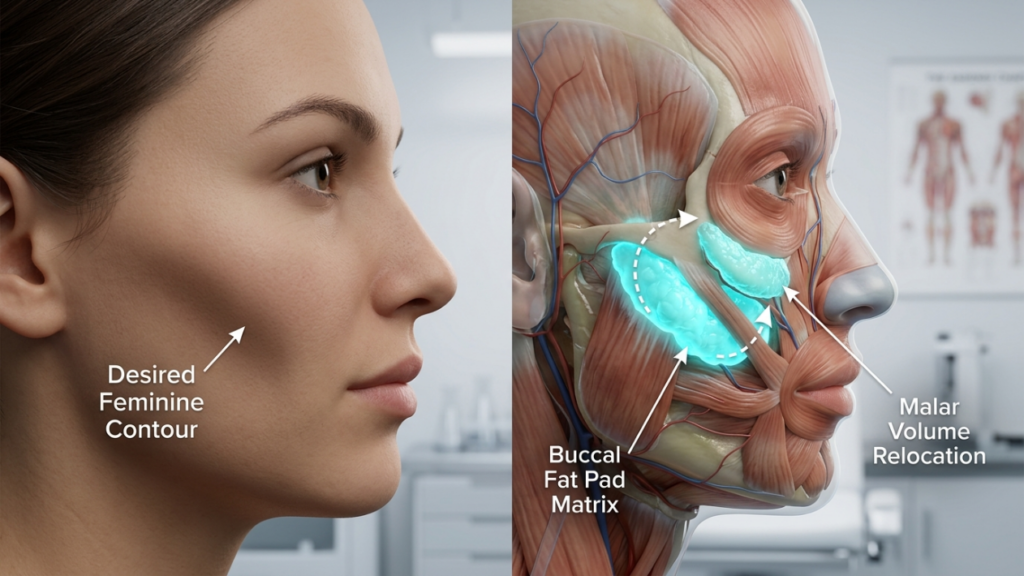
Buccal fat repositioning is typically performed under local anesthesia with sedation, making it a minimally invasive outpatient procedure. The surgery begins with a small incision inside the mouth, near the upper gum line, to access the buccal fat pad. The surgeon then carefully mobilizes the fat pad, preserving its blood supply to ensure viability. The fat is repositioned to the midface, where it is secured in place to augment the cheekbones and fill the submalar hollows. Excess fat in the lower cheeks may be conservatively trimmed to refine the jawline and prevent a bulky appearance.
The procedure takes approximately 1-2 hours, and most patients can return to light activities within a few days. Swelling and bruising are common but typically subside within 2-3 weeks, with final results becoming apparent after 3-6 months as the tissues settle and integrate.
Who Is an Ideal Candidate?
Buccal fat repositioning is best suited for individuals who:
- Have a round or full lower face with insufficient midface volume.
- Desire a heart-shaped, feminine contour with enhanced cheekbones.
- Prefer a permanent solution over temporary fillers or fat grafting.
- Are in good overall health and have realistic expectations about the outcomes.
- Are undergoing or planning other FFS procedures, such as forehead contouring or jaw reshaping, to achieve comprehensive feminization.
This technique is not recommended for individuals with very thin faces or those who lack sufficient buccal fat to mobilize. A thorough consultation with a board-certified facial feminization surgeon is essential to determine candidacy and tailor the procedure to your unique anatomy and goals.
Advantages Over Traditional Methods
| Method | Durability | Natural Feel | Midface Enhancement | Lower Face Slimming | Recovery Time |
|---|---|---|---|---|---|
| Buccal Fat Repositioning | Permanent | High (autologous tissue) | Yes | Yes | 1-2 weeks |
| Hyaluronic Acid Fillers | 6-18 months | Moderate (synthetic) | Yes | No | Minimal |
| Fat Grafting | Long-lasting (variable) | High (autologous) | Yes | No | 1-2 weeks |
| Cheek Implants | Permanent | Moderate (alloplastic) | Yes | No | 2-4 weeks |
The table above illustrates why buccal fat repositioning is gaining traction in 2026. Unlike fillers, which require repeated treatments, or implants, which can feel rigid, buccal fat repositioning offers a permanent, natural-feeling enhancement that addresses both midface volumization and lower face slimming in a single procedure. This makes it a cost-effective and efficient option for those seeking long-term results.
Combining with Other FFS Techniques
Buccal fat repositioning is rarely performed in isolation. To achieve comprehensive feminization, it is often combined with other FFS procedures, such as:
- Forehead Contouring: Type 3 forehead reconstruction or brow bone reduction to soften a prominent brow ridge and create a smoother, more feminine forehead.
- Jaw and Chin Reshaping: Mandibular angle reduction or genioplasty to narrow the lower face and create a softer, V-shaped jawline.
- Rhinoplasty: Feminizing rhinoplasty to refine the nasal bridge and tip, creating a more delicate and balanced profile.
- Hairline Advancement: Scalp advancement or hair transplantation to lower the hairline and create a more feminine facial proportion.
When combined with these procedures, buccal fat repositioning enhances the overall harmony of the face, ensuring that each feature contributes to a cohesive, feminine appearance. The result is a natural, balanced contour that aligns with your gender identity and aesthetic goals.
What to Expect During Recovery
Recovery from buccal fat repositioning is relatively straightforward, but it’s important to follow your surgeon’s post-operative instructions to ensure optimal healing. Here’s what to expect:
- First 24-48 Hours: Swelling and bruising are most pronounced during this period. Cold compresses and prescribed pain medication can help manage discomfort. Most patients are able to return to light activities within a day or two.
- Days 3-7: Swelling begins to subside, and bruising fades. You may be advised to rinse your mouth with an antiseptic solution to prevent infection at the incision site. Stick to a soft diet to avoid disrupting the healing process.
- Weeks 2-3: Most of the swelling resolves, and you can gradually resume normal activities, including exercise. However, avoid strenuous activities or anything that could impact the face for at least 4 weeks.
- Months 3-6: Final results become apparent as the tissues fully settle and integrate. The midface appears more volumized, and the lower face takes on a slimmer, more refined contour.
Your surgeon will schedule follow-up appointments to monitor your progress and address any concerns. While complications are rare, it’s important to choose a surgeon with extensive experience in buccal fat techniques to minimize risks and ensure the best possible outcome.
Potential Risks and Considerations
As with any surgical procedure, buccal fat repositioning carries some risks. These may include:
- Infection or Hematoma: Rare but possible, especially if post-operative care instructions are not followed.
- Asymmetry: Minor asymmetries may occur, though these can often be corrected with revision surgery.
- Over- or Under-Correction: If too much fat is removed or repositioned, the face may appear hollow or overly sculpted. Conversely, under-correction may result in insufficient volumization.
- Nerve Injury: Temporary numbness or weakness in the cheek or lip area may occur but typically resolves within a few weeks.
To minimize these risks, it’s crucial to select a surgeon who specializes in facial feminization and has a proven track record with buccal fat techniques. Reviewing before-and-after photos of previous patients and reading testimonials can provide valuable insight into the surgeon’s skill and aesthetic approach.
The Future of Facial Feminization: Why This Technique Is a Game-Changer
As facial feminization surgery evolves, the demand for techniques that deliver permanent, natural-looking results continues to grow. Buccal fat repositioning is at the forefront of this shift, offering a solution that addresses both midface volumization and lower face slimming in a single, minimally invasive procedure. Its ability to create a heart-shaped, feminine contour without the need for synthetic fillers or implants makes it an attractive option for those seeking a long-term transformation.
In 2026, the technique is being refined further, with surgeons incorporating advanced imaging and 3D planning to customize the procedure for each patient. This ensures that the repositioned fat enhances the natural contours of the face, rather than creating an artificial or overdone appearance. As more surgeons adopt and master this technique, buccal fat repositioning is poised to become a cornerstone of modern facial feminization surgery.

Final Thoughts: Is Buccal Fat Repositioning Right for You?
Buccal fat repositioning represents a significant advancement in facial feminization, offering a permanent, natural-looking solution for those seeking to enhance their midface and refine their lower face. If you’re tired of temporary fillers or want to avoid the unpredictability of fat grafting, this technique may be the ideal choice for achieving a balanced, feminine contour that aligns with your identity.
As with any surgical procedure, the key to success lies in choosing an experienced, board-certified surgeon who understands the nuances of facial feminization. During your consultation, discuss your goals, review before-and-after photos, and ask about the surgeon’s experience with buccal fat techniques. With the right approach, buccal fat repositioning can help you achieve the feminine, heart-shaped contour you’ve always desired—permanently and naturally.
Ready to take the next step? Contact us today to schedule a consultation with a leading FFS surgeon and discover how buccal fat repositioning can transform your facial contour.
FAQ
What is buccal fat repositioning, and how does it differ from buccal fat removal?
Buccal fat repositioning is a surgical technique that involves mobilizing the buccal fat pad to augment the midface (cheekbones and submalar region) while simultaneously slimming the lower face. Unlike buccal fat removal, which simply excises fat and can lead to a hollowed or aged appearance, repositioning preserves the fat’s volume and redistributes it to create a lifted, heart-shaped contour that enhances feminine aesthetics.
Who is the ideal candidate for buccal fat repositioning?
Ideal candidates for buccal fat repositioning are individuals with a round or full lower face who desire enhanced midface volume and a slimmer, more refined jawline. It is particularly well-suited for transgender women and non-binary individuals seeking permanent feminization of their facial contour. A consultation with a board-certified FFS surgeon is essential to determine if you have sufficient buccal fat for the procedure.
How long do the results of buccal fat repositioning last?
The results of buccal fat repositioning are permanent. Unlike fillers, which require repeated treatments, or fat grafting, which can be unpredictable, repositioned buccal fat integrates naturally with surrounding tissues and maintains its volume over time. This makes it a cost-effective and long-term solution for facial feminization.
What is the recovery process like after buccal fat repositioning?
Recovery from buccal fat repositioning is relatively quick. Most patients experience swelling and bruising for the first 2-3 weeks, with the majority of discomfort subsiding within the first week. You can return to light activities within a few days, but strenuous exercise and activities that could impact the face should be avoided for at least 4 weeks. Final results become apparent after 3-6 months as the tissues fully settle and integrate.
Can buccal fat repositioning be combined with other facial feminization procedures?
Yes, buccal fat repositioning is often combined with other FFS procedures to achieve comprehensive feminization. Common complementary procedures include forehead contouring (Type 3 reconstruction), jaw and chin reshaping, feminizing rhinoplasty, and hairline advancement. Combining these techniques ensures a balanced, harmonious result that aligns with your gender identity and aesthetic goals.
What are the potential risks or complications of buccal fat repositioning?
As with any surgical procedure, buccal fat repositioning carries some risks, including infection, hematoma, asymmetry, over- or under-correction, and temporary nerve injury. However, these risks are minimized when the procedure is performed by an experienced, board-certified surgeon. Choosing a specialist with a proven track record in buccal fat techniques is crucial for achieving safe and natural-looking results.
 English (United States)
  English (UK)
  Spanish
  Dutch
Dutch  German
  Arabic
  French
  Russian