


What if the secret to a truly natural Venus belly isn’t just in the abdomen—but in the pubic region you’ve never even considered? For transfeminine individuals undergoing abdominoplasty, the mons pubis is the final frontier of gender-affirming body contouring. Yet, most guides treat it as an afterthought, leaving patients with a flat stomach that still doesn’t align with their feminine silhouette. The truth? Without addressing the monsplasty—a specialized pubic lift—your results may fall short of the harmonious, cis-feminine contours you’ve worked so hard to achieve.
Here’s the kicker: estrogen doesn’t just redistribute fat—it reshapes where that fat sits. Studies show that transfeminine patients on HRT develop a distinct hormonal fat placement pattern in the lower abdomen and pubic area, often resulting in a fuller, more rounded mons. But traditional tummy tucks ignore this biological reality, leaving a telltale masculine flatness that undermines an otherwise flawless Venus belly. The solution? A pubic lift that doesn’t just remove excess skin but strategically repositions adipose tissue to mimic the natural adipose distribution of a cisgender woman’s pelvis. This isn’t just about aesthetics; it’s about aligning your body with the hormonal blueprint estrogen has already laid out.
Table of Contents
Why the Mons Pubis Is the Missing Piece in Transfeminine Abdominoplasty
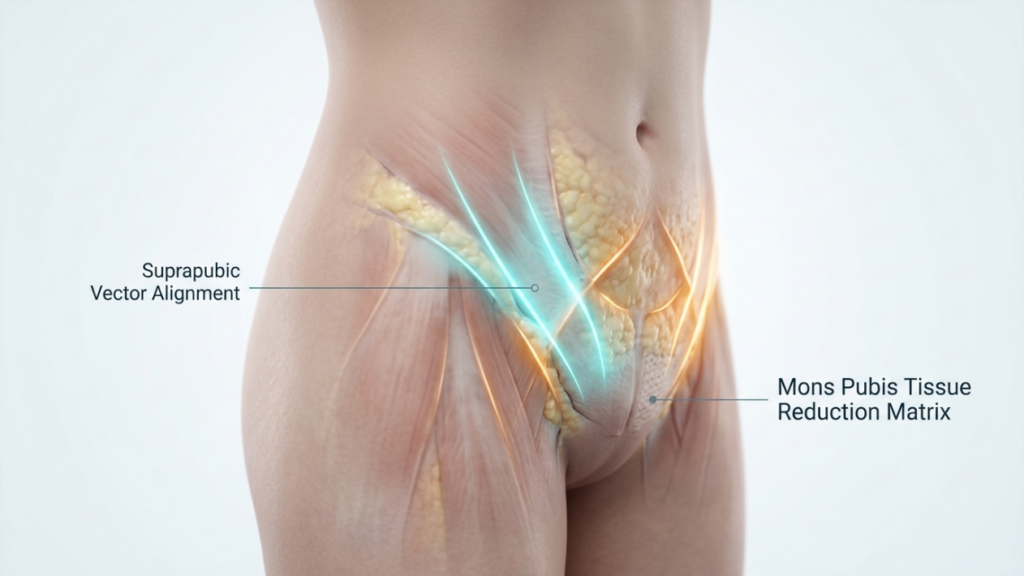
The mons pubis isn’t just a cosmetic detail—it’s a biological landmark. In cisgender women, this area naturally protrudes due to a combination of fat deposition, ligament laxity, and pelvic bone structure. For transfeminine individuals, however, the mons often remains flat or even concave, even after years of HRT. This isn’t a flaw; it’s a mismatch between anatomy and hormones. Research from the Journal of Sexual Medicine reveals that transfeminine patients report higher body dissatisfaction when their pubic region doesn’t reflect their gender identity, regardless of their abdominal contour. The reason? The mons pubis is one of the most gendered areas of the body, and its shape subconsciously signals femininity—or its absence.
Here’s where most surgeons get it wrong: they treat the mons as a standalone issue, separate from the abdomen. But in reality, the Venus belly and mons pubis are anatomically and aesthetically linked. A flat mons can make even the most sculpted abdomen look unnatural, while a well-contoured mons enhances the overall feminine curvature of the lower torso. This is why monsplasty should never be an add-on—it’s a critical component of a comprehensive transfeminine abdominoplasty. The goal isn’t just to remove excess skin; it’s to create a seamless transition from the ribcage to the pubis, where every curve feels intentional and every contour aligns with your gender identity.
The Hormonal Paradox: Why HRT Alone Isn’t Enough
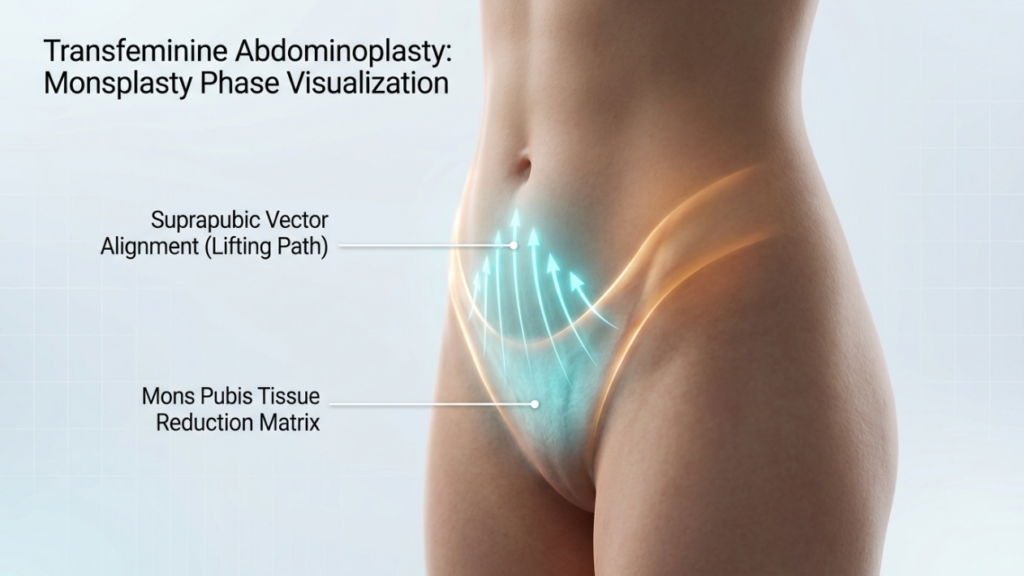
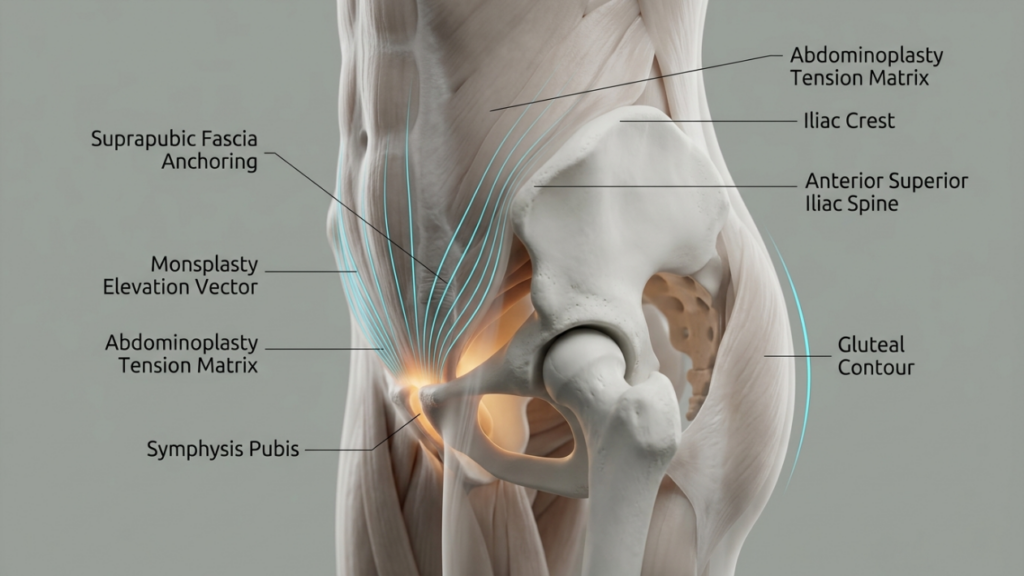
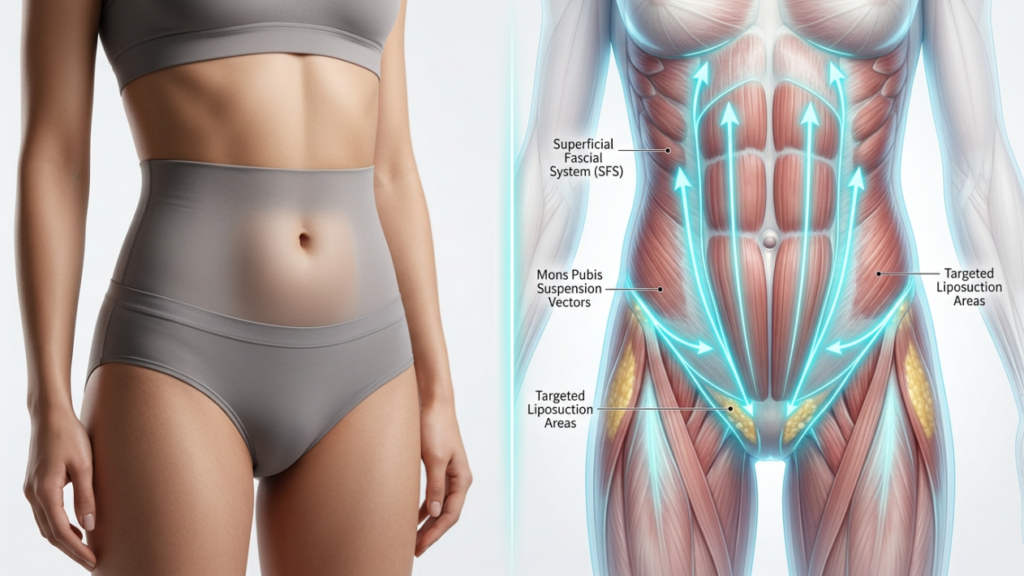
Estrogen is a powerful sculptor, but it has its limits. While HRT can redistribute fat to the hips, thighs, and breasts, the mons pubis often remains stubbornly resistant to these changes. This isn’t a failure of hormones—it’s a structural reality. The mons is anchored by the fundiform ligament, a fibrous band that connects to the pubic bone. In individuals assigned male at birth, this ligament is tighter, pulling the skin taut and flattening the area. Estrogen can soften tissues and encourage fat deposition, but it can’t lengthen ligaments or reshape bone. That’s where monsplasty comes in.
A pubic lift isn’t just a skin excision; it’s a strategic repositioning of tissue. The procedure involves:
- Ligament Release: The fundiform ligament is carefully lengthened to allow the mons to project naturally.
- Fat Redistribution: Excess fat from the lower abdomen is grafted into the mons to create a rounded, feminine contour.
- Skin Tailoring: The skin is tightened and reshaped to eliminate the horizontal scar that can make the area look masculine.
- Hormonal Alignment: The surgeon accounts for your individual fat distribution patterns, ensuring the results complement your HRT-induced changes.
The result? A mons that doesn’t just look feminine—it looks like it was always meant to be that way. This is the difference between a tummy tuck that erases the past and one that embraces the future.
The Venus Belly Synergy: How a Pubic Lift Completes the Look
Imagine your ideal Venus belly: soft, slightly rounded, with a gentle slope from the ribcage to the pubis. Now imagine that belly ending in a flat, masculine mons. The disconnect is jarring, isn’t it? That’s because the mons isn’t just a finishing touch—it’s the anchor of your entire lower torso. A well-contoured mons creates the illusion of a longer, leaner abdomen, while a flat one can make even the most sculpted stomach look boxy or unnatural.
| Feature | Without Monsplasty | With Monsplasty |
|---|---|---|
| Mons Shape | Flat or concave | Rounded and projecting |
| Abdominal Transition | Abrupt, unnatural | Seamless, feminine |
| Scar Placement | Horizontal, visible | Curved, hidden in natural folds |
| Fat Distribution | Masculine pattern | Hormonally aligned |
| Overall Silhouette | Disjointed | Harmonious |
This synergy isn’t just theoretical. A 2023 study in Aesthetic Plastic Surgery found that transfeminine patients who underwent monsplasty alongside abdominoplasty reported significantly higher satisfaction with their overall body image compared to those who only had a tummy tuck. The reason? The pubic lift doesn’t just change the mons—it transforms the way the entire lower torso is perceived. It’s the difference between looking like you’ve had surgery and looking like you’ve always belonged in your body.
The Monsplasty Procedure: What to Expect (And Why It’s Not Just a Tummy Tuck)
If you’re considering monsplasty, it’s essential to understand that this isn’t a one-size-fits-all procedure. Unlike a standard tummy tuck, which focuses solely on the abdomen, a pubic lift requires a nuanced approach that accounts for your unique anatomy, hormonal profile, and aesthetic goals. Here’s what sets it apart:
1. Preoperative Mapping: Designing Your Feminine Contours
Before a single incision is made, your surgeon will perform a detailed assessment of your mons pubis and lower abdomen. This isn’t just about measurements—it’s about understanding how your body responds to estrogen. Using 3D imaging or manual markings, the surgeon will map out:
- The ideal projection of your mons (typically 2–4 cm, depending on your frame).
- The natural crease where the scar will be hidden.
- The areas of excess fat that can be grafted into the mons for a fuller contour.
- The transition points between your abdomen and pubis to ensure a seamless flow.
This step is critical because it ensures that your results aren’t just feminine—they’re uniquely feminine. A mons that’s too flat will look unnatural, while one that’s overly projected can appear exaggerated. The goal is to strike a balance that complements your body type and hormonal fat distribution.
2. The Incision: Where Art Meets Precision
The incision for a pubic lift is strategically placed to minimize visibility while maximizing results. Unlike a traditional tummy tuck, which uses a horizontal incision across the lower abdomen, monsplasty often employs a curved or “inverted-V” incision that follows the natural folds of the pubic area. This approach offers several advantages:
- Scar Concealment: The scar is hidden within the pubic hairline, making it virtually invisible even in swimwear.
- Natural Contouring: The curved incision allows the surgeon to lift and reshape the mons without creating a “pulled” or unnatural appearance.
- Ligament Access: The incision provides direct access to the fundiform ligament, allowing for precise lengthening and repositioning.
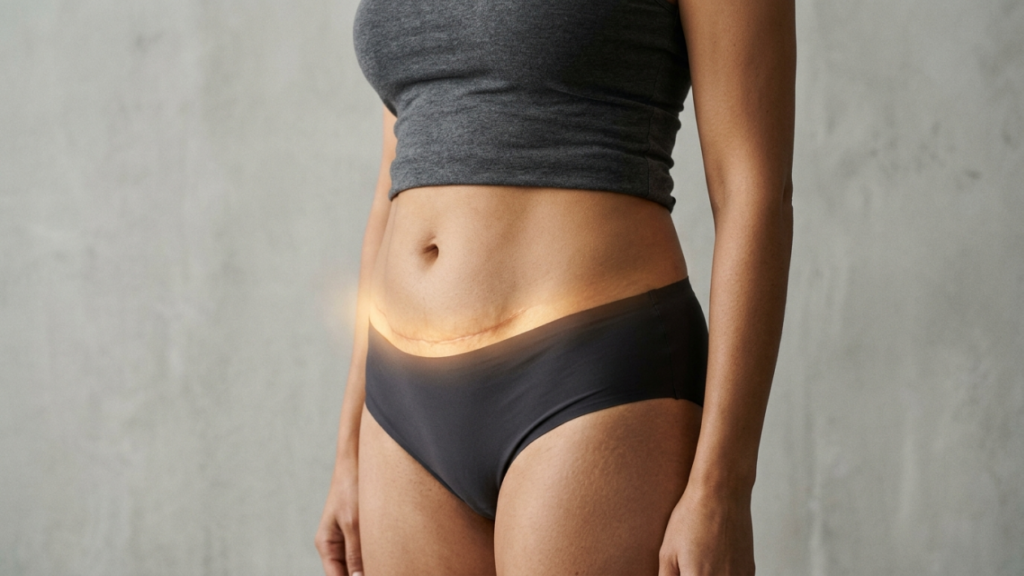
For patients undergoing simultaneous abdominoplasty, the monsplasty incision can often be connected to the tummy tuck incision, creating a single, continuous scar that’s easily concealed. This is where the artistry of the surgeon comes into play—designing an incision that not only achieves the desired lift but also blends seamlessly with your natural anatomy.
3. Tissue Repositioning: The Science of Feminine Projection
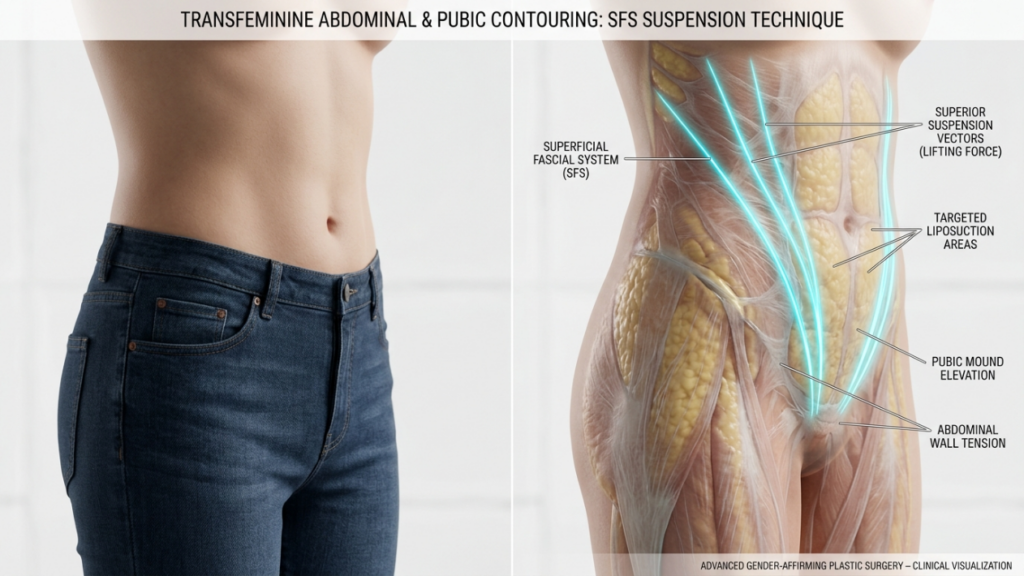
This is where monsplasty diverges from a standard tummy tuck. The goal isn’t just to remove excess skin—it’s to create a mons that projects naturally, mimicking the hormonal fat distribution of a cisgender woman. Here’s how it’s done:
- Ligament Lengthening: The fundiform ligament is carefully released to allow the mons to lift and project. This step is critical for achieving a natural, rounded contour.
- Fat Grafting: Excess fat from the lower abdomen (often removed during abdominoplasty) is purified and injected into the mons to enhance its fullness. This step is particularly important for patients with minimal natural fat in the pubic area.
- Skin Tailoring: The skin is tightened and reshaped to eliminate any horizontal tension that could flatten the mons. The surgeon may also adjust the position of the pubic hairline to create a more feminine appearance.
- Muscle Plication (if needed): In cases where the abdominal muscles have separated (diastasis recti), the surgeon may perform muscle plication to tighten the core and enhance the overall contour of the lower torso.
The result is a mons that doesn’t just sit higher—it looks like it was designed to be there. This is the key to achieving a Venus belly that feels as natural as it looks.
4. Recovery: What to Expect (And How to Optimize Healing)
Recovery from monsplasty is similar to that of a tummy tuck, but with a few key differences. Here’s what you can expect:
| Timeframe | What to Expect | Recovery Tips |
|---|---|---|
| First 48 Hours | Swelling, bruising, and discomfort in the pubic area. You’ll likely have drains to remove excess fluid. | Keep the area elevated, use ice packs, and take prescribed pain medication. Avoid straining or bending. |
| Days 3–7 | Swelling peaks, and you may experience tightness in the mons. Drains are typically removed. | Wear your compression garment as directed, stay hydrated, and avoid sitting for prolonged periods. |
| Weeks 2–4 | Swelling begins to subside, and you can gradually resume light activities. The scar will start to heal. | Begin gentle scar massage with silicone sheets or gel. Avoid strenuous exercise or heavy lifting. |
| Weeks 6–12 | Most swelling resolves, and the mons begins to settle into its final shape. You can return to normal activities. | Continue scar care, and consider using a scar cream to minimize visibility. Follow up with your surgeon for progress checks. |
| 3–6 Months | Final results become visible. The scar continues to fade, and the mons achieves its natural contour. | Protect the scar from sun exposure, and maintain a stable weight to preserve your results. |
One of the most important aspects of recovery is wearing a compression garment. This isn’t just for comfort—it’s essential for reducing swelling, supporting the tissues as they heal, and ensuring the mons settles into its new position. Most surgeons recommend wearing the garment 24/7 for the first 4–6 weeks, with the exception of showering.
The Psychological Impact: Why a Pubic Lift Is About More Than Aesthetics
For transfeminine individuals, body contouring isn’t just about looking good—it’s about feeling whole. The mons pubis, in particular, carries deep psychological significance. It’s an area that’s often hidden, yet intimately tied to gender identity. When it doesn’t align with your sense of self, it can create a subtle but persistent sense of dysphoria, even if the rest of your body feels right.
A 2022 study in Transgender Health found that transfeminine patients who underwent monsplasty reported significant improvements in body image, sexual confidence, and overall quality of life. The reasons are multifaceted:
- Gender Affirmation: A feminine mons reinforces your gender identity in a way that’s both visible and private. It’s an area you see every day, but it’s also one that’s uniquely yours.
- Reduced Dysphoria: When your body aligns with your identity, even in areas others may not see, it reduces the mental load of dysphoria. You’re not constantly “checking” to see if something looks “off.”
- Enhanced Intimacy: For many transfeminine individuals, intimacy can be a source of anxiety. A pubic lift can alleviate some of that stress by ensuring your body reflects your identity, even in private moments.
- Clothing Confidence: A well-contoured mons allows you to wear form-fitting clothing without worrying about flatness or unnatural contours. Swimwear, lingerie, and even tight pants fit better and feel more comfortable.
This psychological impact is why monsplasty should be considered an essential part of transfeminine abdominoplasty, not an optional add-on. It’s not just about creating a Venus belly—it’s about creating a body that feels like yours.
The Ripple Effect: How One Procedure Transforms Your Entire Silhouette
The effects of a pubic lift extend far beyond the mons itself. When this area is properly contoured, it creates a ripple effect that enhances the entire lower torso. Here’s how:
- Elongated Abdomen: A projecting mons creates the illusion of a longer, leaner abdomen, making your torso appear more proportionate.
- Enhanced Waist Definition: The natural curve from the waist to the mons becomes more pronounced, accentuating an hourglass figure.
- Balanced Hips: A feminine mons complements the width of the hips, creating a harmonious lower body silhouette.
- Improved Posture: When the mons is properly positioned, it encourages a more upright posture, which can make you appear taller and more confident.
This ripple effect is why patients who undergo monsplasty alongside abdominoplasty often report feeling like their entire body has been transformed—not just their stomach. It’s the difference between a procedure that changes one area and one that changes everything.
Choosing the Right Surgeon: Why Experience in Transfeminine Body Contouring Matters
Not all plastic surgeons are created equal—especially when it comes to monsplasty. This procedure requires a deep understanding of transfeminine anatomy, hormonal fat distribution, and the unique aesthetic goals of gender-affirming surgery. Here’s what to look for when choosing a surgeon:
1. Specialization in Transfeminine Procedures
A surgeon who specializes in transfeminine body contouring will have a portfolio of before-and-after photos showcasing their work in monsplasty and abdominoplasty. Look for results that align with your goals—natural contours, seamless transitions, and a mons that looks like it belongs to a cisgender woman. Avoid surgeons whose work appears overly aggressive or unnatural.
2. Understanding of Hormonal Fat Distribution
HRT changes the way fat is distributed in the body, and a skilled surgeon will account for these patterns when planning your pubic lift. During your consultation, ask how they tailor the procedure to complement your hormonal profile. A good surgeon will take the time to understand your journey with HRT and how it’s shaped your body.
3. Experience with Combined Procedures
If you’re undergoing monsplasty alongside abdominoplasty or other body contouring procedures, choose a surgeon with experience in combined surgeries. This ensures that all aspects of your transformation are harmonized, from the placement of incisions to the timing of recovery. A surgeon who treats these procedures as separate entities may miss opportunities to enhance your overall results.
4. Patient-Centered Approach
Gender-affirming surgery is deeply personal, and your surgeon should treat it as such. Look for a provider who listens to your goals, answers your questions without judgment, and involves you in every step of the decision-making process. Avoid surgeons who dismiss your concerns or pressure you into additional procedures.
5. Transparent Pricing and Aftercare
The cost of monsplasty can vary widely depending on the surgeon’s experience, the complexity of the procedure, and whether it’s combined with other surgeries. A reputable surgeon will provide a detailed breakdown of costs, including anesthesia, facility fees, and post-operative care. They should also offer comprehensive aftercare, including follow-up appointments, scar management, and support during recovery.
At the Feminization Center, our team specializes in gender-affirming body contouring, with a focus on creating natural, harmonious results. Led by Dr. MFO, a pioneer in transfeminine procedures, we understand the unique needs of our patients and tailor every surgery to align with your individual journey. Whether you’re seeking a pubic lift, abdominoplasty, or a combination of procedures, we’re here to help you achieve the Venus belly you’ve always envisioned.
Final Steps: How to Prepare for Your Monsplasty Journey
If you’re ready to take the next step toward a natural, feminine Venus belly, preparation is key. Here’s a step-by-step guide to ensure your monsplasty journey is as smooth and successful as possible:
- Research and Consultation: Start by researching surgeons who specialize in transfeminine body contouring. Schedule consultations with at least two or three providers to compare their approaches, experience, and results. During these consultations, ask to see before-and-after photos of pubic lifts and discuss how they tailor the procedure to hormonal fat distribution.
- Optimize Your Health: To minimize risks and promote healing, focus on maintaining a stable weight, eating a balanced diet, and staying hydrated in the months leading up to your surgery. If you smoke, quit at least six weeks before your procedure, as smoking can impair healing and increase complications.
- Plan Your Recovery: Recovery from monsplasty requires time and patience. Arrange for at least 2–3 weeks off work, and enlist a friend or family member to assist you during the first few days. Stock up on loose, comfortable clothing, compression garments, and supplies like ice packs and scar care products.
- Follow Preoperative Instructions: Your surgeon will provide specific instructions to prepare for surgery, such as avoiding certain medications, fasting before the procedure, and showering with antibacterial soap. Follow these instructions closely to reduce the risk of complications.
- Set Realistic Expectations: While monsplasty can transform your lower torso, it’s important to have realistic expectations. Your surgeon will help you understand what’s achievable based on your anatomy and hormonal profile. Remember, the goal is to enhance your natural contours, not to achieve perfection.
- Prepare Mentally and Emotionally: Gender-affirming surgery is a deeply personal journey, and it’s normal to feel a mix of excitement and anxiety. Take time to reflect on your goals, and consider speaking with a therapist or support group to process your emotions. Many patients find it helpful to journal or document their journey to track their progress and celebrate their transformation.
- Schedule Your Procedure: Once you’ve chosen your surgeon and prepared for recovery, it’s time to schedule your pubic lift. Work with your surgeon to select a date that allows for adequate downtime and aligns with your personal and professional commitments.
Your Venus belly journey doesn’t end with surgery—it’s just the beginning. As you heal and embrace your new contours, you’ll discover a renewed sense of confidence and alignment with your gender identity. The mons pubis may be a small area, but its impact on your overall silhouette and self-perception is profound. By addressing it as part of your transfeminine abdominoplasty, you’re not just refining your body—you’re reclaiming it.
Ready to take the next step? Contact the Feminization Center today to schedule a consultation with Dr. MFO and explore how monsplasty can complete your transformation. Your journey to a natural, harmonious Venus belly starts here.
FAQ: Monsplasty (Pubic Lift) in Transfeminine Abdominoplasty
What is monsplasty, and how does it differ from a standard tummy tuck?
Monsplasty, or a pubic lift, is a specialized procedure that focuses on reshaping the mons pubis—the fatty area above the pubic bone. Unlike a standard tummy tuck, which primarily addresses excess skin and fat in the abdomen, monsplasty strategically repositions adipose tissue to create a rounded, feminine contour that aligns with hormonal fat distribution patterns. It’s often performed alongside abdominoplasty to achieve a seamless, natural Venus belly.
Why is the mons pubis important for transfeminine individuals undergoing abdominoplasty?
The mons pubis is a highly gendered area of the body, and its shape can significantly impact how your lower torso is perceived. For transfeminine individuals, a flat or masculine mons can undermine the results of an otherwise flawless abdominoplasty, creating a disjointed silhouette. Monsplasty addresses this by creating a natural, feminine projection that complements the Venus belly, enhancing overall harmony and reducing gender dysphoria.
How does hormonal fat distribution influence the results of a pubic lift?
Estrogen redistributes fat in the body, but it often doesn’t fully reshape the mons pubis due to structural limitations like the fundiform ligament. Monsplasty accounts for these hormonal patterns by strategically grafting fat into the mons and releasing ligaments to create a contour that mimics the natural adipose distribution of cisgender women. This ensures your results align with your hormonal profile, rather than working against it.
What can I expect during recovery from monsplasty?
Recovery from monsplasty is similar to that of a tummy tuck but with a focus on the pubic area. You’ll experience swelling and bruising for the first few days, and you’ll need to wear a compression garment for 4–6 weeks to support healing. Most patients can return to light activities within 2–3 weeks, but strenuous exercise should be avoided for at least 6 weeks. Full results typically become visible within 3–6 months as swelling subsides.
How do I choose the right surgeon for monsplasty?
Choosing a surgeon with experience in transfeminine body contouring is critical. Look for a provider who specializes in gender-affirming procedures, understands hormonal fat distribution, and has a portfolio of before-and-after photos showcasing natural, harmonious results. During your consultation, ask how they tailor the procedure to your unique anatomy and hormonal profile. Transparent pricing, comprehensive aftercare, and a patient-centered approach are also key factors to consider.
Can monsplasty be combined with other procedures, such as liposuction or breast augmentation?
Yes, monsplasty is often combined with other gender-affirming procedures to create a comprehensive transformation. Common combinations include abdominoplasty, liposuction of the flanks or thighs, and breast augmentation. Combining procedures can reduce overall recovery time and ensure your results are harmonized. However, it’s important to choose a surgeon experienced in combined surgeries to minimize risks and optimize outcomes.
What are the risks associated with monsplasty?
Like any surgical procedure, monsplasty carries risks, including infection, bleeding, adverse reactions to anesthesia, and poor wound healing. However, these risks can be minimized by choosing a qualified surgeon, following preoperative and postoperative instructions, and maintaining a stable weight. It’s also important to disclose your full medical history, including any medications or supplements you’re taking, to reduce the likelihood of complications.
How long do the results of a pubic lift last?
The results of monsplasty are long-lasting, provided you maintain a stable weight and follow your surgeon’s aftercare instructions. Significant weight fluctuations can alter the contour of the mons, so it’s important to adopt a healthy lifestyle to preserve your results. Additionally, protecting your scar from sun exposure and using scar care products can help minimize visibility and ensure your results remain natural and refined over time.
 English (United States)
  English (UK)
  Spanish
  Dutch
Dutch  German
  Arabic
  French
  Russian