
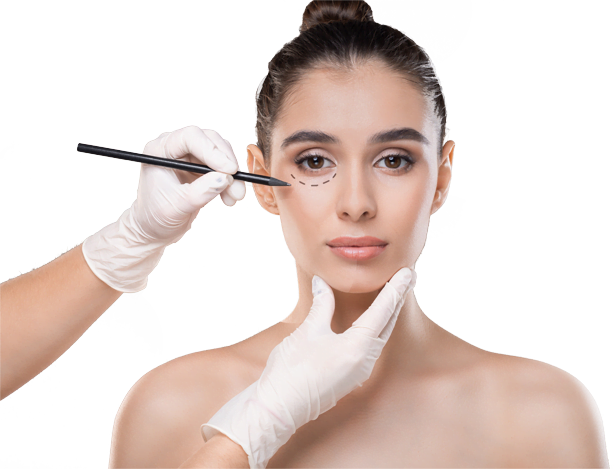

Qu’est-ce qui rend un visage indéniablement féminin ? La réponse ne réside pas dans une opinion subjective, mais dans la science précise de… proportions faciales féminines. Depuis des siècles, artistes, scientifiques et chirurgiens cherchent à décrypter les principes mathématiques et anthropométriques qui définissent la beauté. Que vous envisagiez une chirurgie de féminisation du visage ou que vous soyez simplement fascinée par la science de l'esthétique, comprendre ces proportions peut transformer votre perception – et votre manière d'atteindre – l'harmonie féminine. Ce guide explore en profondeur les règles d'or de la symétrie faciale et le rôle de… dimorphisme sexuel, et comment les chirurgiens modernes utilisent mesures anthropométriques Créer des visages qui reflètent une beauté intemporelle.
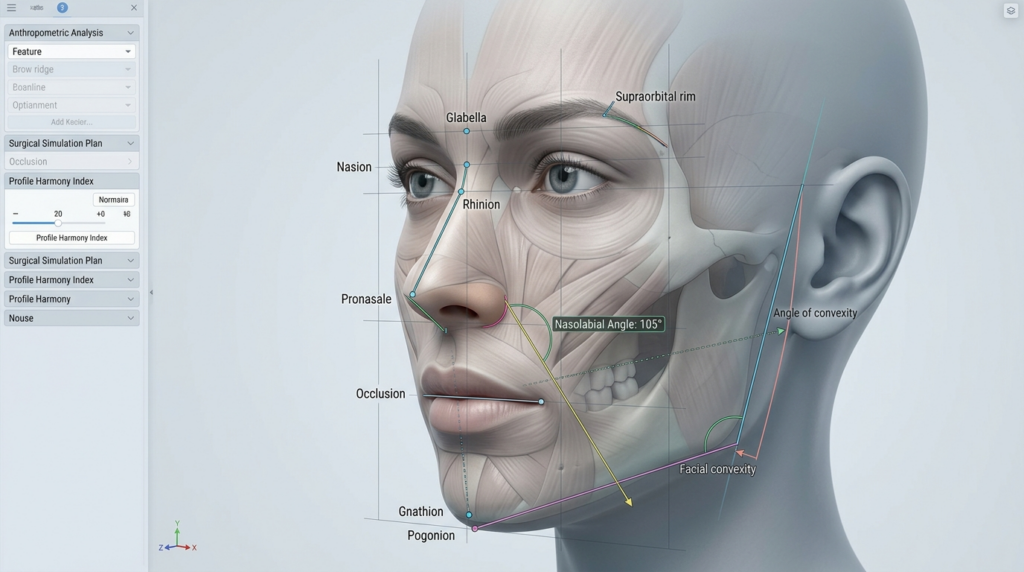
Table des matières
Le nombre d'or dans la féminisation : le modèle naturel de la beauté
Le Nombre d'or, Le rapport λ/λ, une constante mathématique approximativement égale à 1,618, est la pierre angulaire de la perfection esthétique. Du Parthénon à la Joconde, ce rapport a guidé les artistes dans la création de compositions harmonieuses. Dans le contexte de proportions faciales féminines, Le nombre d'or définit les relations idéales entre les principaux traits du visage :
- Distance œil-bouche : La distance entre les yeux et la bouche doit respecter le nombre d'or. Chez les femmes, cette distance est généralement plus courte que chez les hommes, ce qui contribue à une apparence plus douce et plus jeune. Les chirurgiens ajustent souvent cette proportion lors d'une féminisation faciale pour accentuer la féminité.
- Hauteur du front et largeur de la mâchoire : Un front plus haut et une mâchoire plus étroite sont des caractéristiques de la beauté féminine. Des études en anthropologie craniofaciale révèlent que les femmes ont généralement un front qui représente environ un tiers de la hauteur de leur visage, tandis que leur mâchoire est moins prononcée. mesures anthropométriques sont essentielles dans la planification chirurgicale de la féminisation faciale.
Le nombre d'or n'est pas qu'un concept théorique : c'est un outil pratique. Les chirurgiens l'utilisent pour planifier les corrections faciales, s'assurant ainsi que chaque modification respecte les proportions idéales. En respectant ces proportions, ils obtiennent des résultats non seulement esthétiques, mais aussi en harmonie avec les traits uniques de chaque individu.
Comment les chirurgiens planifient votre nouveau visage : l’art et la science de la chirurgie de féminisation faciale
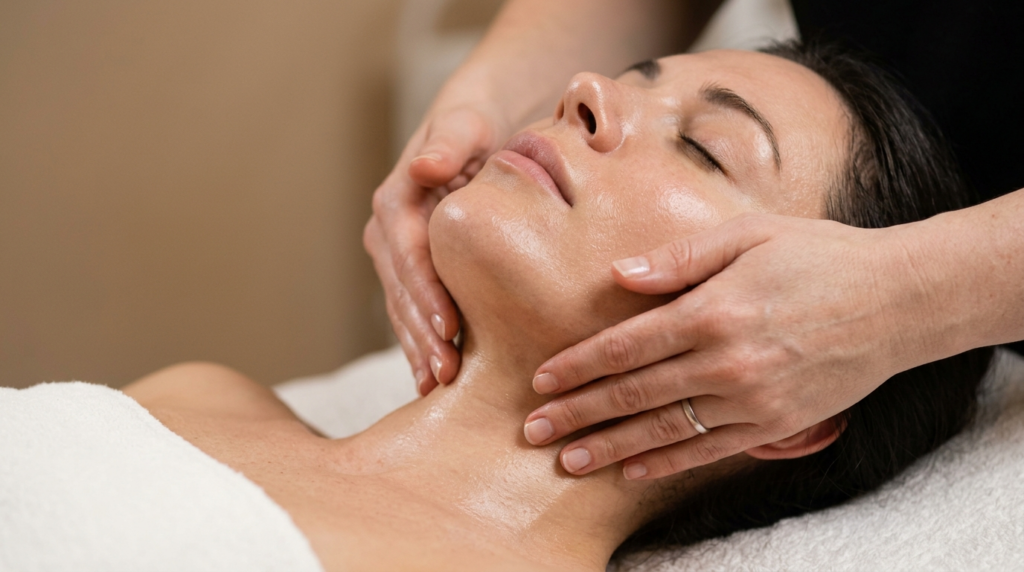
La chirurgie de féminisation faciale (CFF) est un processus transformateur qui allie art et précision scientifique. Les chirurgiens ne se fient pas uniquement à leur intuition ; ils utilisent des outils et des techniques de pointe pour analyser… symétrie faciale et dimorphisme sexuel. Voici comment ils procèdent :
- Imagerie et simulation 3D : Avant toute incision, les chirurgiens créent un modèle 3D du visage de la patiente. Cela leur permet de simuler les modifications potentielles et d'en visualiser le résultat. En ajustant des proportions comme la largeur des pommettes, la forme du menton et le contour des sourcils, ils peuvent prévisualiser comment les interventions mettront en valeur la féminité.
- Analyse anthropométrique : En utilisant mesures anthropométriques, Les chirurgiens comparent la structure faciale de la patiente aux normes féminines établies. Cette analyse met en évidence les zones où les ajustements, comme la réduction de l'arcade sourcilière ou le remodelage de la mâchoire, auront l'impact le plus significatif.
- Considérations ethno-spécifiques : La beauté n'est pas une notion universelle. Les chirurgiens tiennent compte des variations ethniques et culturelles. proportions faciales féminines. Par exemple, les structures faciales asiatiques et caucasiennes peuvent nécessiter des approches différentes pour obtenir des résultats harmonieux. Cette personnalisation ethnique garantit des résultats à la fois esthétiques et authentiques.
- Personnalisation centrée sur le patient : Chaque visage est unique, et chaque parcours de féminisation faciale l'est tout autant. Les chirurgiens travaillent en étroite collaboration avec les patientes pour comprendre leurs objectifs et s'assurer que le résultat final corresponde à leur vision de la féminité. Cette approche collaborative garantit satisfaction et confiance dans le résultat.
En combinant une technologie de pointe avec une compréhension approfondie de symétrie faciale, Les chirurgiens peuvent obtenir des résultats à la fois scientifiquement précis et artistiquement saisissants. L'objectif n'est pas seulement de féminiser le visage, mais aussi de sublimer sa beauté naturelle, pour créer une apparence qui vous soit propre et authentique.
Pour un aperçu complet des procédures FFS, consultez notre site web. Aperçu de la chirurgie de féminisation du visage (FFS).

Le rôle du dimorphisme sexuel dans la féminisation du visage
dimorphisme sexuel désigne les différences de caractéristiques physiques entre les hommes et les femmes. Dans le contexte des traits du visage, ces différences sont profondes et mesurables. Par exemple :
- Crête du sourcil : Les hommes ont généralement des arcades sourcilières plus marquées, tandis que les femmes ont un front plus lisse et arrondi. La réduction des arcades sourcilières est une intervention courante en chirurgie de féminisation faciale pour adoucir le haut du visage.
- Menton et mâchoire : Les visages masculins présentent souvent une mâchoire plus carrée et un menton plus prononcé. Les interventions de féminisation visent à affiner la mâchoire et le menton pour créer un visage plus ovale ou en forme de cœur.
- Volume des lèvres : Des lèvres pulpeuses sont un atout féminin. L'augmentation ou le lifting des lèvres permet d'accroître leur volume et de redessiner leur contour, contribuant ainsi à une apparence plus jeune et féminine.
- Pommettes : Des pommettes hautes et bien dessinées sont associées à la féminité. Une augmentation ou une réduction des pommettes peut permettre d'obtenir le contour et l'équilibre souhaités.
Compréhension dimorphisme sexuel Cette technique permet aux chirurgiens d'effectuer des retouches ciblées qui mettent en valeur la féminité tout en préservant l'identité unique de la patiente. L'objectif n'est pas d'effacer l'individualité, mais de souligner les traits qui correspondent à l'expression de genre de la patiente.
La science derrière la beauté : que disent les recherches ?
Les recherches publiées dans les revues d'anthropologie craniofaciale et de chirurgie esthétique offrent des perspectives fascinantes sur proportions faciales féminines. Des études ont montré que certains ratios et certaines mesures sont systématiquement associés à la beauté perçue :
- Taille et forme des yeux : Les yeux plus grands et en amande sont considérés comme féminins. Des interventions comme la blépharoplastie (chirurgie des paupières) permettent d'améliorer la forme et la taille des yeux, pour un regard plus ouvert et expressif.
- Forme du nez : Un nez plus petit et plus fin, légèrement retroussé, représente l'idéal féminin. La rhinoplastie permet de remodeler le nez pour atteindre cet équilibre subtil.
- Forme du visage : Un visage ovale ou en forme de cœur est souvent perçu comme plus féminin. Des interventions telles que la réduction de la mâchoire et l'augmentation des pommettes peuvent permettre d'obtenir cette forme recherchée.
- Texture de la peau : Une peau plus lisse et plus lumineuse est associée à la jeunesse et à la féminité. Des traitements comme le lipofilling et le resurfaçage laser peuvent améliorer la texture et le teint de la peau.
Ces découvertes ne sont pas seulement théoriques : elles influencent la pratique des plus grands chirurgiens du monde. En fondant leur travail sur la recherche scientifique, les chirurgiens peuvent obtenir des résultats à la fois esthétiques et étayés par des preuves.

Conclusion : Embrassez votre beauté féminine
La science de proportions faciales féminines révèle que la beauté n'est pas arbitraire ; elle repose sur des principes mesurables qui ont résisté à l'épreuve du temps. Que vous envisagiez une féminisation faciale ou que vous soyez simplement curieux de l'art de l'harmonie faciale, comprendre ces proportions vous permet de prendre des décisions éclairées concernant votre apparence. En tirant parti de Nombre d'or, symétrie faciale, et mesures anthropométriques, Les chirurgiens peuvent créer des visages qui sont non seulement beaux, mais aussi authentiquement les vôtres.
Prête à découvrir comment la féminisation faciale peut sublimer votre beauté naturelle ? Contactez-nous dès aujourd'hui Pour planifier une consultation avec notre équipe d'experts, commencez ici votre chemin vers une version plus féminine et plus confiante de vous-même.
FAQ
Quelles sont les proportions faciales féminines ?
Proportions faciales féminines se référer aux mesures et proportions spécifiques qui définissent un visage traditionnellement féminin. Il s'agit notamment d'un front plus haut, d'une mâchoire plus étroite, d'une distance plus courte entre les yeux et la bouche et de lèvres plus pulpeuses. Ces proportions sont souvent guidées par… Nombre d'or et sont utilisées dans la chirurgie de féminisation faciale (FFS) pour créer des traits féminins harmonieux.
Comment les chirurgiens utilisent-ils le nombre d'or en chirurgie de féminisation faciale ?
Les chirurgiens utilisent le Nombre d'or Il s'agit d'un plan directeur pour planifier les ajustements faciaux. En analysant la structure faciale de la patiente et en la comparant aux proportions féminines idéales, on peut déterminer où apporter des modifications précises — comme réduire l'arcade sourcilière ou affiner le contour de la mâchoire — afin d'obtenir une apparence féminine et harmonieuse.
Qu’est-ce que le dimorphisme sexuel des traits du visage ?
dimorphisme sexuel Cela fait référence aux différences physiques entre les visages masculins et féminins. Par exemple, les hommes ont généralement des arcades sourcilières plus marquées et une mâchoire plus carrée, tandis que les femmes ont un front plus lisse et une mâchoire plus étroite. Comprendre ces différences est essentiel en chirurgie de féminisation faciale pour sublimer la féminité tout en préservant l'individualité.
La chirurgie de féminisation faciale peut-elle donner des résultats d'apparence naturelle ?
Oui, la féminisation faciale peut donner des résultats naturels lorsqu'elle est pratiquée par des chirurgiens expérimentés qui comprennent proportions faciales féminines et symétrie faciale. Grâce à des techniques de pointe et à une planification personnalisée, les chirurgiens veillent à ce que le résultat mette en valeur la beauté naturelle de la patiente plutôt que de paraître artificiel.
Combien de temps dure la convalescence après une féminisation faciale ?
La durée de la convalescence varie selon les interventions pratiquées, mais la plupart des patients peuvent reprendre des activités légères en 2 à 3 semaines. La guérison complète, incluant la disparition de l'œdème et des ecchymoses, prend généralement de 3 à 6 mois. Votre chirurgien vous fournira des instructions postopératoires détaillées pour assurer un rétablissement optimal.
 French
  English (United States)
  English (UK)
  Spanish
  Dutch
Dutch  German
  Arabic
  Russian