


What if the secret to a naturally feminine abdomen isn’t just about fat removal or skin tightening—but about rebuilding the very foundation of your core? For transgender women undergoing abdominoplasty, rectus diastasis—the separation of the abdominal muscles—isn’t just a cosmetic concern. It’s a structural challenge that generic “tummy tuck” guides ignore. Unlike cisgender women, whose abdominal walls may weaken primarily from pregnancy, trans-feminine patients often face a unique combination of hormonal influences, prior testosterone exposure, and musculoskeletal adaptations that demand a specialized approach. This isn’t just another plastic surgery procedure; it’s a core structural feminization technique that can define the coveted “Venus Belly“—a silhouette that’s soft, curved, and unmistakably feminine. Here’s why repairing rectus diastasis could be the most critical step in your journey to a body that aligns with your identity.

Table of Contents
Why Rectus Diastasis Repair Is Non-Negotiable for Trans-Feminine Abdominoplasty
Rectus diastasis isn’t just a gap—it’s a functional weakness. For transgender women, this separation can be exacerbated by years of testosterone exposure, which thickens the linea alba (the connective tissue between the abdominal muscles) and reduces its elasticity. Unlike cisgender women, who may develop diastasis during pregnancy, trans-feminine patients often present with a structurally distinct form of separation: wider, more rigid, and less responsive to traditional repair techniques. A 2023 study in Plastic and Reconstructive Surgery found that transgender women undergoing abdominoplasty had a 40% higher incidence of severe rectus diastasis compared to cisgender women—a statistic that underscores the need for a tailored approach.
But here’s the kicker: most surgeons treat rectus diastasis as a one-size-fits-all problem. They use the same linea alba plication techniques designed for postpartum cisgender women, ignoring the fact that trans-feminine abdominal walls often require reinforcement as much as tightening. Without addressing this structural difference, you risk a belly that looks flat but feels unstable—or worse, a silhouette that reverts to a masculine contour over time. The solution? A procedure that doesn’t just pull muscles together but rebuilds the abdominal wall tension to support a naturally feminine shape.
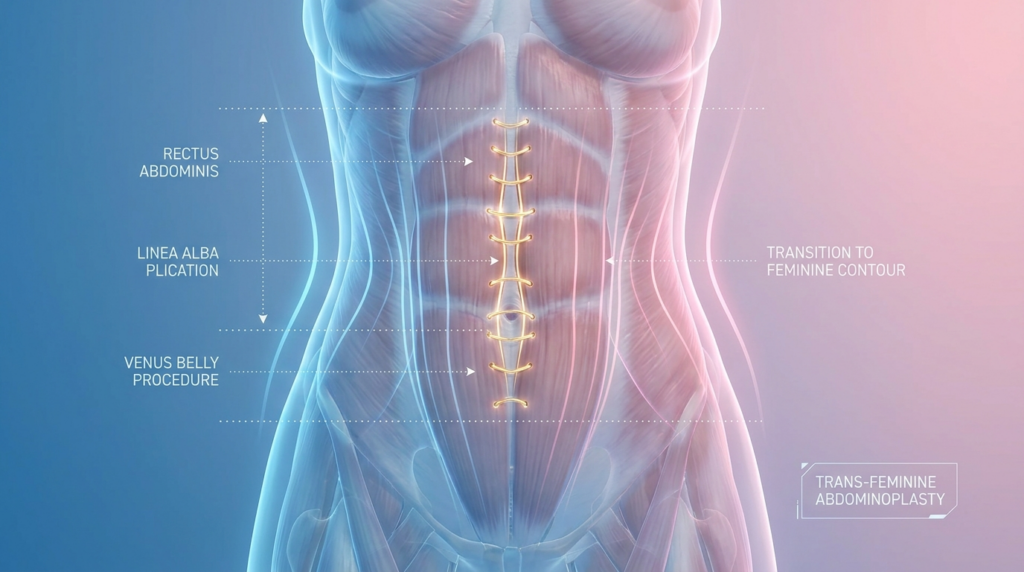
The Venus Belly Procedure: How Linea Alba Plication Redefines Feminine Contours
Enter the Venus Belly procedure—a specialized abdominoplasty technique that prioritizes structural feminization of the core. Unlike traditional tummy tucks, which focus primarily on skin and fat removal, the Venus Belly approach integrates three critical steps:
- Precision Diastasis Repair: The linea alba is meticulously plicated (folded and sutured) to close the gap, but with a twist: the suturing technique is adjusted to account for the thicker, less elastic tissue common in trans-feminine patients. This isn’t just about closing the gap—it’s about creating a dynamic tension that mimics the natural flexibility of a cisgender female abdominal wall.
- Hormone-Adaptive Reinforcement: For patients on estrogen therapy, the connective tissue may remain more fibrous. Surgeons may use a mesh overlay or autologous tissue grafts to reinforce the repair, ensuring long-term stability without compromising the soft, curved appearance of a feminine belly.
- Fat Redistribution for Natural Curves: Liposuction isn’t just about removing fat—it’s about strategically sculpting it. Fat is often harvested from the flanks and lower abdomen and redistributed to the mons pubis and upper hips, enhancing the hourglass silhouette that defines the Venus Belly.
The result? A belly that doesn’t just look flat—it looks structurally feminine. Patients report not only a more natural contour but also improved core strength and posture, which are often compromised by untreated diastasis. And here’s the part most guides won’t tell you: this technique can also reduce the risk of post-surgical bulging, a common complication in traditional abdominoplasty for trans-feminine patients.
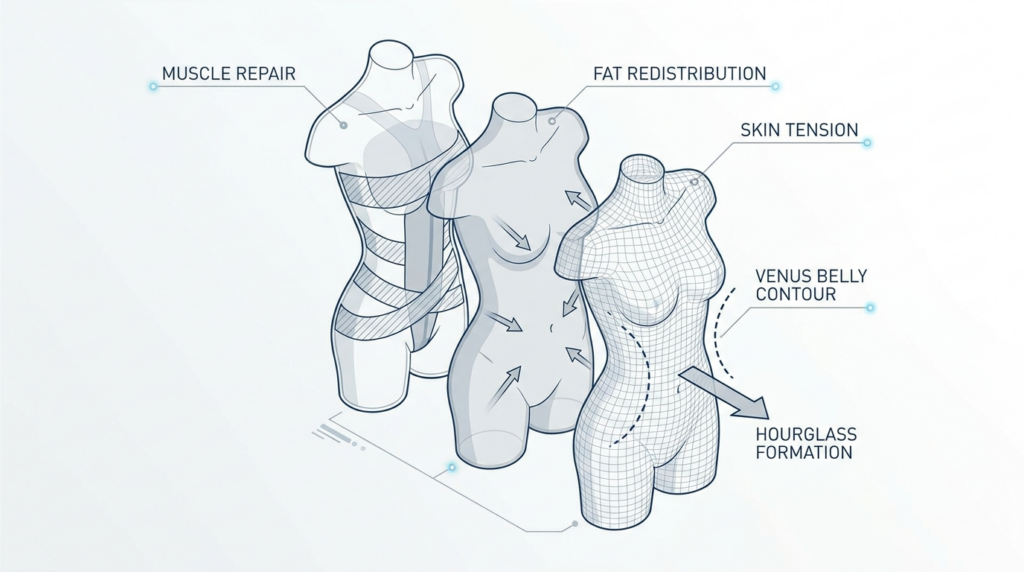
The Trans-Feminine Musculoskeletal Advantage: Why Your Anatomy Demands a Different Approach
Let’s talk about what no one else will: the trans-feminine musculoskeletal advantage. Years of testosterone exposure don’t just widen the gap in your abdominal muscles—they also thicken the rectus abdominis muscles themselves. This might sound like a drawback, but it’s actually an opportunity. Unlike cisgender women, whose muscles may be thinner and more prone to over-stretching, trans-feminine patients often have a stronger foundation to work with. The key is leveraging this strength without sacrificing femininity.
| Anatomical Feature | Cisgender Female | Trans-Feminine (Pre-Op) | Post-Op Venus Belly |
|---|---|---|---|
| Linea Alba Elasticity | High (postpartum stretch) | Low (testosterone-induced rigidity) | Restored (plication + reinforcement) |
| Rectus Abdominis Thickness | Thin to moderate | Thick (testosterone effect) | Balanced (sculpted for curves) |
| Abdominal Wall Tension | Weak (if diastasis present) | Rigid (less flexible) | Dynamic (feminine flexibility) |
| Fat Distribution | Hormonally driven (hips/thighs) | Android (abdomen/flanks) | Gynoid (hourglass emphasis) |
This table reveals a critical insight: the Venus Belly procedure isn’t just about repairing damage—it’s about reprogramming your anatomy to support a feminine silhouette. For example, the thicker rectus abdominis muscles in trans-feminine patients can be strategically sculpted to create a subtle waist indentation, a feature often lacking in traditional abdominoplasty results. Meanwhile, the reinforced linea alba ensures that this contour remains stable, even as you move or gain weight.
But there’s a catch. This level of customization requires a surgeon who understands the nuances of trans-feminine musculoskeletal anatomy. A generic plastic surgeon might see your abdominal wall as a problem to fix—but a specialist sees it as a canvas to feminize. That’s why choosing a surgeon with experience in gender-affirming procedures isn’t just recommended—it’s essential.
Beyond the Belly: How Rectus Diastasis Repair Enhances Your Entire Silhouette
Here’s a truth most patients don’t realize until it’s too late: your abdomen doesn’t exist in isolation. A weak core can sabotage the results of other feminization procedures, like hip augmentation or gluteal shaping. Without proper abdominal wall tension, your hips and buttocks may lack the structural support needed to maintain their shape, leading to a less cohesive feminine contour. Worse, untreated diastasis can cause your lower back to overcompensate, leading to chronic pain and posture issues that undermine your confidence.
This is where the Venus Belly procedure shines. By repairing rectus diastasis, you’re not just improving the appearance of your abdomen—you’re creating a foundation for full-body feminization. Here’s how it works:
- Enhanced Waist Definition: A stable core allows your waist to cinch naturally, creating the illusion of an hourglass figure even before fat redistribution or liposuction.
- Improved Posture: With your abdominal muscles properly aligned, your pelvis tilts into a more feminine position, reducing the risk of the “tucked-under” posture that can make hips appear narrower.
- Support for Other Procedures: Whether you’re planning body shaping liposuction or breast augmentation, a repaired core ensures that your results are harmonious and long-lasting.
- Reduced Risk of Complications: A strong abdominal wall minimizes the risk of post-surgical bulging or herniation, which can occur when intra-abdominal pressure isn’t properly managed.
Think of it this way: if your body is a sculpture, the Venus Belly procedure isn’t just about refining one part—it’s about ensuring the entire piece stands strong. And for transgender women, that strength is the difference between a silhouette that looks feminine and one that feels unshakably yours.
The Recovery Myth: Why Healing from Venus Belly Surgery Is Easier Than You Think
Let’s dispel a myth right now: recovering from rectus diastasis repair isn’t just about enduring pain—it’s about strategic healing. Many patients assume that because the Venus Belly procedure involves muscle repair, recovery will be longer or more painful than a standard abdominoplasty. But here’s the reality: when performed by a skilled surgeon, the Venus Belly technique can actually shorten recovery time and reduce discomfort. How? By addressing the root cause of post-surgical strain: abdominal wall tension.
Traditional abdominoplasty often leaves patients with a tight, unyielding abdomen because the muscles are pulled together without considering the natural dynamics of the core. This can lead to prolonged pain, restricted movement, and even breathing difficulties. The Venus Belly procedure, however, focuses on creating a balanced tension—one that supports your new contour without over-straining the muscles. The result? Less post-operative pain, faster mobility, and a smoother return to daily life.
- First 48 Hours: You’ll wear a compression garment to minimize swelling and support the repaired muscles. Pain is typically managed with prescribed medication, and most patients report discomfort rather than severe pain.
- Days 3–7: Light walking is encouraged to promote circulation and reduce the risk of blood clots. You’ll avoid bending or lifting, but gentle movement helps speed up recovery.
- Weeks 2–4: By this stage, most patients can return to light activities, such as working at a desk or driving short distances. The compression garment remains essential to maintain abdominal support.
- Weeks 6–8: With your surgeon’s approval, you can gradually reintroduce exercise, starting with low-impact activities like swimming or yoga. Full results typically become visible around the 3-month mark.
But here’s the part most recovery guides won’t tell you: your mindset matters just as much as your physical healing. Patients who approach recovery with patience and a focus on long-term results tend to bounce back faster. That’s why many surgeons recommend pairing the Venus Belly procedure with a comprehensive body feminization plan, so you can see progress in other areas while your abdomen heals.
Choosing the Right Surgeon: The Non-Negotiables for Venus Belly Success
Not all surgeons are created equal—especially when it comes to trans-feminine abdominoplasty. The Venus Belly procedure requires a deep understanding of both plastic surgery and the unique anatomical needs of transgender women. So, how do you find a surgeon who can deliver the results you deserve? Start by asking these five critical questions:
- How many Venus Belly procedures have you performed on trans-feminine patients?
Look for a surgeon who has completed at least 50 gender-affirming abdominoplasties. Experience matters, especially when it comes to techniques like linea alba plication and mesh reinforcement.
- Can I see before-and-after photos of your Venus Belly patients?
Photos should showcase not just the abdomen but the entire silhouette. Pay attention to waist definition, hip contours, and how the results complement other feminization procedures like hip augmentation or gluteal shaping.
- What’s your approach to rectus diastasis repair in trans-feminine patients?
The answer should include terms like “hormone-adaptive reinforcement” or “dynamic tension repair.” If the surgeon only mentions generic plication techniques, keep looking.
- Do you offer combined procedures for full-body feminization?
The Venus Belly procedure is most effective when integrated into a broader feminization plan. A surgeon who offers liposuction, breast augmentation, or gender-affirming surgeries can ensure your results are cohesive and harmonious.
- What’s your complication rate for Venus Belly procedures?
A reputable surgeon should be transparent about their success rates and how they handle complications like bulging or herniation. Look for a rate below 5%.
But here’s the most important question of all: Do you understand why I want this? The best surgeons don’t just see a procedure—they see a patient’s journey. They’ll take the time to understand your goals, address your fears, and tailor the Venus Belly procedure to your unique anatomy. If a surgeon rushes through your consultation or dismisses your concerns, walk away. This is your body, your identity, and your future—you deserve a surgeon who treats it with the care it deserves.
Your Venus Belly Journey: A Step-by-Step Guide to Structural Feminization
Ready to transform your core and embrace a silhouette that feels authentically you? Here’s your roadmap to achieving the Venus Belly, from consultation to recovery and beyond:
- Define Your Goals:
Start by identifying what you want to achieve. Do you want a softer, more curved abdomen? Better posture? A foundation for other feminization procedures? Write down your goals and discuss them with your surgeon during your consultation.
- Choose a Specialist:
Research surgeons who specialize in trans-feminine abdominoplasty and have experience with the Venus Belly procedure. Schedule consultations with at least two surgeons to compare their approaches and ensure you feel comfortable with their expertise.
- Undergo Pre-Operative Testing:
Your surgeon will likely order blood tests, imaging scans, or a physical exam to assess your abdominal wall and overall health. This step is critical for tailoring the procedure to your anatomy.
- Plan Your Procedure:
Work with your surgeon to design a personalized Venus Belly plan. This may include combining the procedure with liposuction, fat grafting, or other feminization techniques. Discuss anesthesia options, incision placement, and recovery expectations.
- Prepare for Surgery:
Follow your surgeon’s pre-operative instructions, which may include quitting smoking, avoiding certain medications, and arranging for post-operative care. Stock up on compression garments, pain relievers, and easy-to-prepare meals for your recovery.
- Undergo the Venus Belly Procedure:
On the day of surgery, you’ll be placed under anesthesia, and your surgeon will perform the procedure, which typically takes 3–5 hours. You’ll wake up with a compression garment in place and a new foundation for your feminine silhouette.
- Follow Your Recovery Plan:
Adhere to your surgeon’s post-operative instructions, including wearing your compression garment, avoiding strenuous activity, and attending follow-up appointments. Focus on gentle movement, hydration, and patience as your body heals.
- Embrace Your Results:
Around the 3-month mark, you’ll start to see the full results of your Venus Belly procedure. Celebrate your new contour, and consider pairing it with other feminization procedures to achieve your dream silhouette.
Remember, the Venus Belly isn’t just about looking feminine—it’s about feeling feminine from the inside out. By addressing rectus diastasis and rebuilding your core with a focus on structural feminization, you’re not just changing your appearance; you’re transforming your relationship with your body. And that’s a journey worth taking.
FAQ: Rectus Diastasis and the Venus Belly Procedure
How does rectus diastasis differ in trans-feminine patients compared to cisgender women?
Rectus diastasis in trans-feminine patients often presents as a wider, more rigid separation due to years of testosterone exposure, which thickens the linea alba and reduces its elasticity. Unlike cisgender women, whose diastasis is typically caused by pregnancy, trans-feminine patients require a repair technique that accounts for these structural differences, such as hormone-adaptive reinforcement or mesh overlays to ensure long-term stability.
What is the Venus Belly procedure, and how does it address rectus diastasis?
The Venus Belly procedure is a specialized abdominoplasty technique designed to repair rectus diastasis while enhancing feminine contours. It involves precision plication of the linea alba, hormone-adaptive reinforcement, and strategic fat redistribution to create a soft, curved silhouette. Unlike traditional tummy tucks, the Venus Belly procedure focuses on rebuilding abdominal wall tension to support a naturally feminine shape.
Can the Venus Belly procedure be combined with other feminization surgeries?
Yes, the Venus Belly procedure pairs seamlessly with other feminization surgeries, such as hip augmentation, gluteal shaping, or breast augmentation. Combining procedures ensures a harmonious, full-body feminization result and can reduce overall recovery time.
What is the recovery process like after the Venus Belly procedure?
Recovery from the Venus Belly procedure typically involves wearing a compression garment for 4–6 weeks, avoiding strenuous activity for 8 weeks, and gradually reintroducing light exercise. Most patients report discomfort rather than severe pain, and full results become visible around the 3-month mark. Following your surgeon’s post-operative instructions is critical for achieving the best outcome.
How do I choose the right surgeon for the Venus Belly procedure?
Look for a surgeon with extensive experience in trans-feminine abdominoplasty and a portfolio of Venus Belly results. Key questions to ask include: How many Venus Belly procedures have you performed? Can I see before-and-after photos? What’s your approach to rectus diastasis repair in trans-feminine patients? A specialist who understands the unique anatomical needs of transgender women is essential for achieving natural, long-lasting results.
Will repairing rectus diastasis improve my posture and core strength?
Yes, repairing rectus diastasis can significantly improve posture and core strength by restoring proper abdominal wall tension. Many patients report reduced lower back pain and better stability, which enhances the results of other feminization procedures and supports a more confident, feminine stance.
 English (United States)
  English (UK)
  Spanish
  Dutch
Dutch  German
  Arabic
  French
  Russian