


Imagine waking up after your facial feminization surgery (FFS), looking in the mirror, and feeling a wave of disappointment. The results aren’t what you envisioned—perhaps your forehead still appears too prominent, your jawline remains asymmetrical, or the contours of your face lack the natural softness you desired. For many transgender women and non-binary individuals, this scenario is a harsh reality. Unsuccessful FFS procedures can leave you feeling trapped, both emotionally and physically, with results that don’t align with your true self. But what if there was a way to turn this around? What if you could correct those imperfections and finally achieve the feminine appearance you’ve always dreamed of?
This is where revision FFS surgery in Antalya comes into play. Antalya, a jewel of Turkey’s medical tourism industry, has emerged as a beacon of hope for those seeking to correct unsuccessful FFS procedures. With its blend of highly skilled surgeons, cutting-edge technology, and a patient-centered approach, Antalya offers a unique opportunity to rewrite your story. In this guide, we’ll explore why revision FFS surgery is often necessary, the common procedures involved, and how to choose the right surgeon to ensure your journey toward femininity is both safe and successful. By the end, you’ll not only understand the transformative power of revision FFS but also why the Feminization Center in Antalya stands out as a leader in this specialized field.
Table of Contents
Why Revision FFS Surgery is Needed: The Hidden Challenges of Unsuccessful Procedures
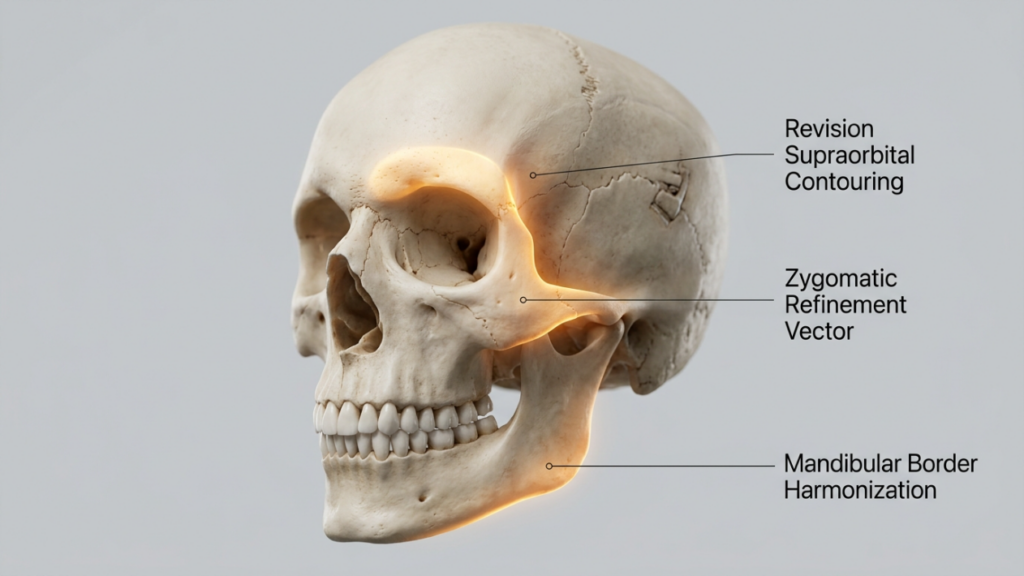
Undergoing facial feminization surgery (FFS) is a deeply personal and transformative experience. It’s not just about altering your appearance; it’s about aligning your outer self with your inner identity. However, not all FFS procedures yield the desired results. In fact, studies suggest that up to 15% of patients who undergo FFS require revision surgery to correct complications or unsatisfactory outcomes. This statistic isn’t just a number—it represents real people who trusted a process that fell short of their expectations. So, why do some FFS procedures fail, and what can be done to correct them?
The reasons for unsuccessful FFS procedures are as varied as the individuals who undergo them. However, some common themes emerge:
- Incomplete or Over-Aggressive Bone Reshaping: One of the most frequent issues in FFS is the improper reshaping of facial bones. For example, the forehead and brow bone are critical areas for achieving a feminine appearance. If the surgeon doesn’t remove enough bone, the forehead may still appear too masculine. Conversely, over-resection can create an unnatural, overly flat appearance, which can be just as distressing. A study published in the Journal of Craniofacial Surgery highlights that asymmetrical or incomplete bone contouring is a leading cause of patient dissatisfaction in FFS procedures.
- Asymmetrical Results: Symmetry is the cornerstone of facial harmony. Unfortunately, asymmetry is a common complication in FFS, particularly in procedures like jaw reduction or chin contouring. Even minor asymmetries can be glaringly obvious to the patient, leading to self-consciousness and a lack of confidence. Research from the European Journal of Plastic Surgery indicates that asymmetry is the second most common reason for revision surgery in facial feminization cases.
- Complications from Previous Surgeries: Complications such as nerve damage, excessive scarring, or poor wound healing can not only affect the aesthetic outcome but also lead to functional issues. For instance, nerve damage during jaw or chin surgery can result in numbness or altered sensation, which may persist long after the procedure. Scarring, particularly in visible areas like the hairline or around the ears, can also detract from the overall result.
- Dissatisfaction with Aesthetic Outcomes: Sometimes, the issue isn’t a complication but simply a mismatch between the patient’s expectations and the results. This can happen when there’s a lack of communication between the patient and surgeon or when the surgeon’s artistic vision doesn’t align with the patient’s goals. For example, a patient may desire a softly contoured jawline, but the surgeon might create a more angular result, leaving the patient feeling misaligned with their appearance.
- Ethnic-Specific Challenges: FFS is not a one-size-fits-all procedure. Different ethnicities have distinct facial structures, and what works for one patient may not be suitable for another. For instance, patients of East Asian descent often require different techniques for forehead contouring compared to those of European descent. A surgeon who lacks experience in ethno-specific FFS may inadvertently create results that look unnatural or fail to enhance the patient’s unique features.
The emotional toll of an unsuccessful FFS procedure cannot be overstated. For many patients, FFS is a pivotal step in their transition journey, and when the results fall short, it can lead to feelings of despair, frustration, and even gender dysphoria. This is why revision FFS surgery is not just about correcting physical imperfections—it’s about restoring hope and helping patients reclaim their confidence.
Common Revision FFS Procedures: Correcting the Past, Shaping the Future

Revision FFS surgery is a highly specialized field that requires a surgeon with not only technical expertise but also an artistic eye. Unlike primary FFS, revision procedures often involve correcting the work of another surgeon, which can present unique challenges. Scar tissue, altered anatomy, and the need for precise adjustments make revision FFS more complex. However, with the right surgeon and advanced techniques, it’s possible to achieve results that are even better than what you initially envisioned.
Let’s explore some of the most common revision FFS procedures and how they can help correct unsuccessful outcomes:
Forehead Contouring Revisions: Restoring Balance and Harmony
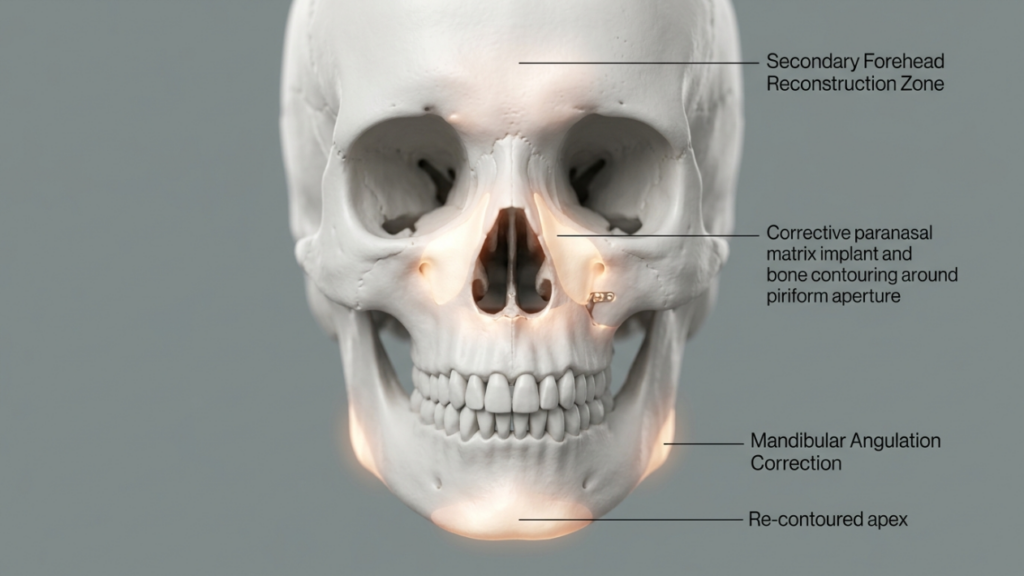
The forehead is one of the most critical areas in FFS, as it plays a significant role in facial gender perception. A masculine forehead often has a prominent brow bone and a sloping contour, while a feminine forehead is typically smoother and more rounded. Unfortunately, forehead contouring is also one of the most common areas where primary FFS procedures fall short. Whether it’s due to incomplete bone removal or over-resection, an unsatisfactory forehead can throw off the entire balance of your face.
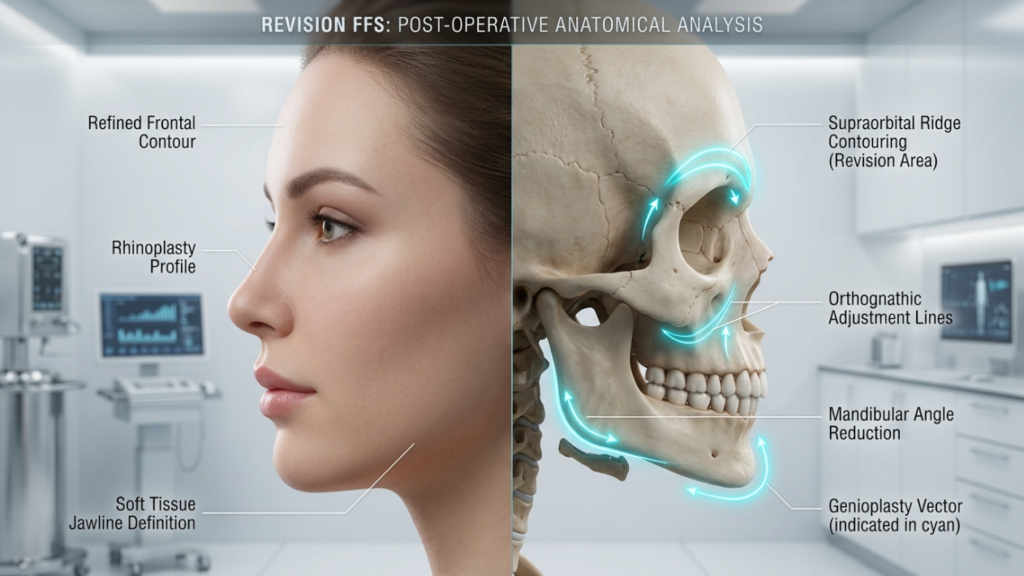
Revision forehead contouring often involves type III forehead reconstruction, a technique pioneered by surgeons like Dr. MFO. This procedure involves reshaping the brow bone and forehead to create a more natural, feminine contour. In cases where the initial surgery resulted in over-resection, techniques like bone grafting or implants may be used to restore volume and achieve a harmonious appearance. The goal is not just to correct the imperfections but to create a forehead that complements your other facial features.
Jaw and Chin Reshaping Corrections: Achieving the Perfect V-Line
The jaw and chin are defining features of facial femininity. A masculine jawline is often square and angular, while a feminine jawline is softer and more tapered, often described as a V-line. However, achieving this look is easier said than done. Common issues in primary FFS include over-resection of the jaw, which can create an unnaturally narrow or weak appearance, or under-resection, which leaves the jawline looking too masculine.
Revision jaw and chin reshaping may involve genioplasty (chin surgery) or mandibular angle reduction. In cases where the jaw was over-resected, techniques like fat grafting or implants can be used to restore balance and create a more natural contour. For patients with asymmetrical results, precise bone shaving or augmentation can help achieve symmetry. The key is to create a jawline that is not only feminine but also harmonious with the rest of your facial features.
Rhinoplasty Revisions: Refining the Centerpiece of Your Face
The nose is often considered the centerpiece of the face, and its shape can significantly influence how your gender is perceived. A masculine nose is typically larger and more angular, while a feminine nose is smaller, with a softer tip and a more refined bridge. Rhinoplasty is a common procedure in FFS, but it’s also one of the most technically challenging. Unsatisfactory results can include a nose that looks too small, too upturned, or simply unnatural.
Revision rhinoplasty focuses on refining the shape and proportions of the nose to create a more natural, feminine appearance. This may involve adjusting the nasal bridge, refining the tip, or correcting asymmetry. In some cases, cartilage grafts may be used to add structure and support. The goal is to create a nose that not only looks feminine but also complements your other facial features, enhancing your overall harmony.
Tracheal Shave Adjustments: Softening the Adam’s Apple
The Adam’s apple is one of the most visible markers of masculinity, and its reduction is often a key component of FFS. However, tracheal shave procedures can sometimes result in incomplete reduction, leaving a visible bulge, or over-reduction, which can create an unnatural appearance. In some cases, scarring or irregularities in the skin can also detract from the results.
Revision tracheal shave procedures focus on achieving a smoother, more natural contour. This may involve further reduction of the thyroid cartilage or addressing scar tissue to create a seamless appearance. The goal is to eliminate the visible bulge while ensuring that the skin heals smoothly, without any irregularities.
Soft Tissue Corrections: Enhancing Natural Femininity
While bone reshaping is a critical component of FFS, soft tissue procedures play an equally important role in achieving a feminine appearance. Common soft tissue corrections in revision FFS include fat grafting, scar revision, and lip feminization. For example, fat grafting can be used to restore volume to areas that appear hollow or sunken due to over-resection, while scar revision can minimize the appearance of visible scars from previous surgeries.
Lip feminization, which may involve a lip lift or lip filling, can also be a game-changer in revision FFS. A lip lift can create a more defined Cupid’s bow, while lip filling can add volume and fullness, enhancing the overall femininity of your smile. These procedures are often performed in combination with other revision techniques to achieve a harmonious, natural look.
The Role of 3D Imaging in Revision FFS: Precision Planning for Flawless Results
One of the biggest advancements in revision FFS surgery is the use of 3D imaging technology. This tool allows surgeons to create a virtual model of your face, which can be used to plan and simulate the results of your revision procedure. For patients who have undergone unsuccessful FFS, 3D imaging is particularly valuable because it allows the surgeon to identify the specific areas that need correction and develop a precise surgical plan.
At the Feminization Center, 3D imaging is a standard part of the revision process. During your virtual consultation, Dr. MFO will use this technology to analyze your facial structure, discuss your goals, and create a customized surgical plan. This not only ensures that your results are precise but also gives you a clear understanding of what to expect from your revision surgery.
Choosing the Right Surgeon for Revision FFS: Why Expertise Matters More Than Ever
If you’ve experienced an unsuccessful FFS procedure, the idea of undergoing another surgery can be daunting. The last thing you want is to entrust your face to a surgeon who lacks the expertise to correct the issues you’re facing. This is why choosing the right surgeon for revision FFS surgery is arguably the most critical decision you’ll make. Unlike primary FFS, revision procedures require a surgeon with specialized skills, experience, and an artistic eye for detail. So, how do you find a surgeon who can deliver the results you deserve?
Here are the key factors to consider when selecting a surgeon for revision FFS:
- Specialized Experience in Revision Cases: Revision FFS is a niche within a niche. Not all FFS surgeons have extensive experience in correcting the work of others. Look for a surgeon who has a proven track record in revision procedures, particularly in addressing the specific issues you’re facing. For example, if your primary FFS resulted in over-resection of the jaw, you’ll want a surgeon who has successfully corrected this issue in previous patients.
- Advanced Techniques and Technology: The field of FFS is constantly evolving, and the best surgeons stay at the forefront of these advancements. Look for a surgeon who uses 3D imaging, virtual consultations, and minimally invasive techniques to ensure precision and safety. These tools not only enhance the accuracy of your revision procedure but also improve your overall experience.
- Patient Testimonials and Before/After Galleries: One of the best ways to gauge a surgeon’s expertise is by reviewing their patient testimonials and before/after photos. Look for testimonials from patients who underwent revision FFS, particularly those with similar concerns to yours. Before/after galleries can also give you a sense of the surgeon’s artistic style and the quality of their results. At the Feminization Center, we proudly showcase our patients’ transformations, demonstrating our commitment to delivering natural, harmonious results.
- Transparency and Communication: A good surgeon will take the time to listen to your concerns, answer your questions, and set realistic expectations. During your consultation, pay attention to how the surgeon communicates. Do they explain the revision process in detail? Do they discuss the potential risks and challenges? Are they open about their approach and techniques? Transparency is a hallmark of a trustworthy surgeon.
- Ethno-Specific Expertise: As mentioned earlier, FFS is not a one-size-fits-all procedure. Different ethnicities have distinct facial structures, and a surgeon with experience in ethno-specific FFS can tailor the procedure to enhance your unique features. For example, patients of Middle Eastern descent may require different techniques for forehead contouring compared to those of East Asian descent. A surgeon who understands these nuances can create results that look natural and harmonious.
- Patient Safety and Comfort: Revision FFS is a complex procedure, and patient safety should always be the top priority. Look for a clinic that adheres to international safety standards, such as JCI accreditation, and provides comprehensive pre- and post-operative care. At the Feminization Center, we prioritize your safety and comfort, offering 24/7 patient coordination, multilingual support, and personalized recovery plans.
Choosing the right surgeon for revision FFS is not just about correcting the past—it’s about shaping your future. The right surgeon will not only address the physical imperfections but also restore your confidence and help you embrace your true self. This is why the Feminization Center in Antalya stands out as a leader in revision FFS surgery. With Dr. MFO’s specialized expertise, advanced techniques, and patient-centered approach, you can trust that you’re in the best hands.
The Feminization Center’s Approach to Revision FFS: A Personalized Path to Your Ideal Look
At the Feminization Center, we understand that revision FFS is more than just a medical procedure—it’s a second chance to achieve the feminine appearance you’ve always desired. Our approach is built on three pillars: personalization, precision, and patient care. We believe that every patient is unique, and so too should be their surgical plan. Whether you’re seeking to correct asymmetrical results, refine your contours, or address complications from a previous surgery, our team is dedicated to helping you achieve your goals with safety and confidence.
Customized Surgical Plans: Tailored to Your Unique Needs
No two faces are alike, and neither are the challenges faced by patients seeking revision FFS. This is why we begin every revision journey with a thorough consultation, where we take the time to understand your concerns, goals, and expectations. Using 3D imaging technology, we create a virtual model of your face, allowing us to simulate the results of your revision procedure and develop a customized surgical plan. This plan is tailored to address the specific issues you’re facing, whether it’s over-resection of the jaw, asymmetrical forehead contouring, or unsatisfactory rhinoplasty results.
Our surgical plans are designed to be comprehensive, addressing not just the physical imperfections but also the emotional and psychological aspects of your journey. We believe that revision FFS is about more than just correcting the past—it’s about empowering you to embrace your future with confidence.
Advanced Techniques for Natural, Harmonious Results
At the Feminization Center, we leverage the latest advancements in FFS to ensure that your revision procedure delivers natural, harmonious results. One of our key techniques is type III forehead reconstruction, which allows us to reshape the brow bone and forehead with precision, creating a smoother, more feminine contour. For patients with over-resected jaws, we use fat grafting or implants to restore volume and achieve a balanced, natural appearance.
In revision rhinoplasty, we focus on refining the shape and proportions of the nose to create a result that complements your other facial features. Our goal is to create a nose that looks feminine, natural, and in harmony with your overall appearance. We also use minimally invasive techniques to minimize scarring and ensure a smooth recovery.
Multilingual Support and 24/7 Patient Coordination
Undergoing revision FFS in a foreign country can be intimidating, which is why we offer multilingual support and 24/7 patient coordination to ensure a seamless experience. From the moment you reach out to us, our dedicated team will guide you through every step of your journey, from scheduling your consultation to planning your travel and recovery. We understand that communication is key, which is why we offer support in multiple languages, including English, Spanish, and Arabic.
Our patient coordinators are available around the clock to answer your questions, address your concerns, and provide the support you need. Whether you need help with travel arrangements, accommodation, or post-operative care, we’re here to make your experience as smooth and stress-free as possible.
Comprehensive Recovery Support: Healing in Comfort
Recovery is a critical phase of your revision FFS journey, and we’re committed to ensuring that you heal in comfort and safety. After your procedure, you’ll stay in one of Antalya’s luxury recovery hotels, where you’ll receive 24/7 medical supervision and personalized care. Our recovery hotels are designed to cater to the unique needs of medical tourists, offering private rooms, nutritious meals, and a peaceful environment to promote healing.
During your recovery, our team will monitor your progress and provide guidance on post-operative care. We’ll also schedule follow-up appointments to ensure that your healing is on track and address any concerns you may have. Our goal is to make your recovery as smooth and comfortable as possible, so you can focus on embracing your new look.
Case Studies: Real Stories of Transformation at the Feminization Center
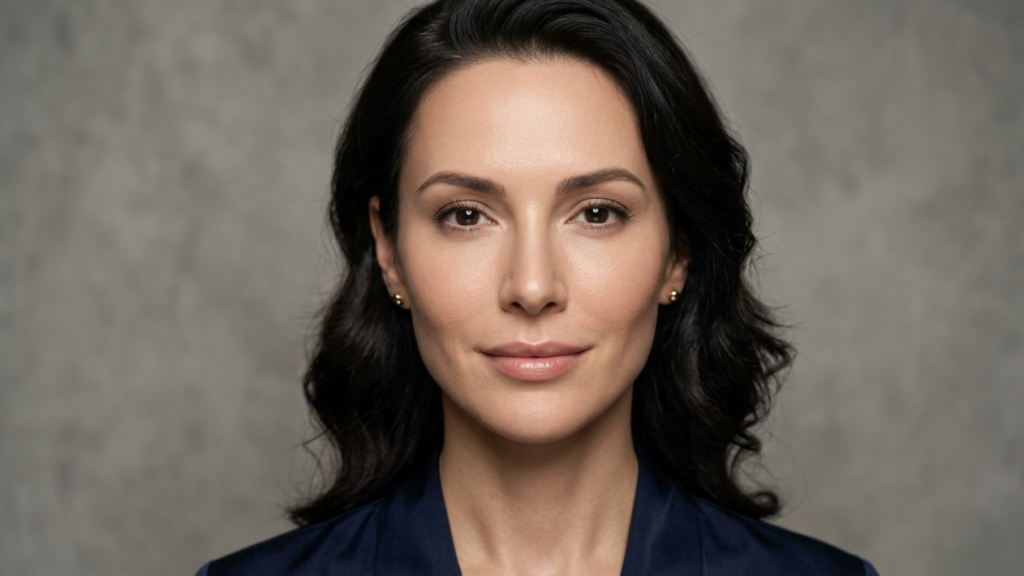
At the Feminization Center, we believe that the best way to understand the transformative power of revision FFS is through the stories of our patients. Below, we share two real-life case studies of patients who underwent revision FFS at our clinic. Their journeys highlight the challenges they faced, the solutions we provided, and the life-changing results they achieved.
Case Study 1: Correcting Over-Resection of the Jaw
Patient Profile: Sarah, a 32-year-old transgender woman from the UK, underwent FFS in her home country. While her forehead contouring and rhinoplasty results were satisfactory, her jaw reduction left her with an unnaturally narrow and weak appearance. She struggled with self-confidence and felt that her face lacked balance and harmony.
Challenges: Sarah’s primary FFS surgeon had over-resected her jaw, removing too much bone and creating an imbalance with the rest of her facial features. She also experienced asymmetry, with one side of her jaw appearing more recessed than the other. Sarah was hesitant to undergo another surgery, fearing that the results might be even worse.
Solution: During her consultation at the Feminization Center, Dr. MFO used 3D imaging to analyze Sarah’s facial structure and develop a customized surgical plan. The revision procedure involved fat grafting to restore volume to her jaw and create a more natural contour. Dr. MFO also addressed the asymmetry by carefully reshaping the bone on the recessed side. The goal was to create a jawline that was not only feminine but also harmonious with Sarah’s other facial features.
Results: Six months after her revision surgery, Sarah’s results were nothing short of transformative. Her jawline now had a soft, tapered appearance that complemented her forehead and nose. The asymmetry was corrected, and the fat grafting had restored a natural fullness to her face. Sarah reported a significant boost in her confidence and felt that her outer appearance finally aligned with her inner identity. She described her experience at the Feminization Center as life-changing, saying, “I finally feel like myself.”
Case Study 2: Addressing Asymmetrical Forehead Contouring
Patient Profile: Alex, a 28-year-old non-binary individual from the USA, underwent FFS with the goal of achieving a more androgynous appearance. While they were satisfied with their jaw and chin results, their forehead contouring left them with noticeable asymmetry. One side of their forehead appeared flatter than the other, creating an unbalanced look that drew unwanted attention.
Challenges: Alex’s primary surgeon had struggled to achieve symmetry during the forehead contouring procedure. The asymmetry was particularly noticeable in certain lighting and angles, making Alex self-conscious about their appearance. They were also concerned about the potential for further complications, as their initial surgery had resulted in visible scarring along the hairline.
Solution: Dr. MFO conducted a thorough analysis of Alex’s forehead using 3D imaging and identified the areas that required correction. The revision procedure involved type III forehead reconstruction to reshape the brow bone and create a more symmetrical contour. Dr. MFO also addressed the scarring by using advanced techniques to minimize its appearance. The goal was to create a forehead that was not only symmetrical but also natural and harmonious.
Results: Three months after their revision surgery, Alex’s forehead had a smooth, symmetrical appearance that enhanced their overall facial harmony. The scarring was significantly reduced, and Alex reported feeling more confident in their appearance. They described their experience at the Feminization Center as empowering, saying, “I finally feel like I can present myself to the world without fear.”
FAQs About Revision FFS Surgery: Your Questions Answered
How soon can I undergo revision FFS surgery after my initial procedure?
The timing of revision FFS surgery depends on several factors, including the extent of your initial procedure and your body’s healing process. Generally, it’s recommended to wait at least 6–12 months after your primary FFS to allow for complete healing and stabilization of your results. This waiting period ensures that your surgeon can accurately assess the areas that require correction and develop a precise surgical plan. During your consultation at the Feminization Center, Dr. MFO will evaluate your unique situation and provide personalized recommendations.
What are the risks of revision FFS surgery, and how can I minimize them?
Like any surgical procedure, revision FFS carries risks, including infection, bleeding, and adverse reactions to anesthesia. However, the risks can be minimized by choosing a surgeon with specialized experience in revision cases and a clinic that adheres to international safety standards, such as JCI accreditation. At the Feminization Center, we prioritize patient safety by using advanced techniques, providing comprehensive pre- and post-operative care, and offering 24/7 patient coordination. Following your surgeon’s instructions and attending all follow-up appointments can further reduce the risk of complications.
How does the recovery process for revision FFS differ from primary FFS?
Recovery from revision FFS can be slightly more complex than recovery from primary FFS, particularly if your revision involves correcting bone or soft tissue. Swelling and bruising may be more pronounced, and the healing process may take longer. However, with proper care and support, most patients can return to their daily activities within 2–3 weeks. At the Feminization Center, we provide personalized recovery plans, including stays at luxury recovery hotels, to ensure that your healing process is as smooth and comfortable as possible.
Will revision FFS surgery leave visible scars?
Scarring is a natural part of the healing process, but the visibility of scars can be minimized with advanced surgical techniques and proper post-operative care. At the Feminization Center, we use minimally invasive approaches to reduce scarring, and we provide detailed instructions for scar care to help you achieve the best possible results. In many cases, scars fade significantly over time and become barely noticeable, particularly when placed in discreet locations like the hairline or natural creases.
How do I know if I’m a good candidate for revision FFS surgery?
If you’re dissatisfied with the results of your primary FFS, whether due to asymmetry, over-resection, or other complications, you may be a good candidate for revision FFS. The best way to determine your eligibility is to schedule a consultation with a surgeon who specializes in revision cases. At the Feminization Center, Dr. MFO will evaluate your facial structure, discuss your goals, and develop a customized surgical plan to address your specific concerns. We also offer virtual consultations for international patients, making it easy to explore your options.
What makes the Feminization Center a leader in revision FFS surgery?
The Feminization Center stands out as a leader in revision FFS surgery due to our specialized expertise, advanced techniques, and patient-centered approach. Dr. MFO has over a decade of experience in facial feminization and is renowned for his ability to correct complex cases, such as over-resection of the jaw or asymmetrical forehead contouring. Our clinic uses 3D imaging and virtual consultations to ensure precision, and we provide comprehensive support, including multilingual coordination and luxury recovery options, to make your journey as seamless as possible.
Conclusion: Your Journey to a Refined, Feminine Appearance Starts Here
Undergoing facial feminization surgery (FFS) is a courageous step toward aligning your outer appearance with your inner identity. However, when the results fall short of your expectations, it can feel like your journey has been derailed. The emotional and physical toll of an unsuccessful FFS procedure is profound, but it doesn’t have to be the end of your story. Revision FFS surgery in Antalya offers a second chance to correct those imperfections and achieve the feminine, harmonious look you’ve always desired.
At the Feminization Center, we understand the unique challenges faced by patients seeking revision FFS. Our approach is built on a foundation of expertise, precision, and compassion. Dr. MFO’s specialized experience in correcting complex cases, combined with our use of advanced techniques like 3D imaging and virtual consultations, ensures that your revision procedure is tailored to your unique needs. We don’t just correct the past—we empower you to embrace a future where you feel confident, beautiful, and truly yourself.
Your journey to a refined, feminine appearance begins with a single step. Whether you’re seeking to correct asymmetrical results, address complications from a previous surgery, or simply enhance your natural beauty, the Feminization Center is here to guide you every step of the way. Our multilingual support, 24/7 patient coordination, and luxury recovery options ensure that your experience is as seamless and comfortable as possible. You don’t have to settle for less than you deserve—your ideal look is within reach.
Ready to take the next step? Contact us today to schedule a consultation with Dr. MFO and explore your options for revision FFS surgery in Antalya. Your transformation starts here, and we’re committed to helping you achieve the results you’ve always dreamed of.
 English (United States)
  English (UK)
  Spanish
  Dutch
Dutch  German
  Arabic
  French
  Russian